





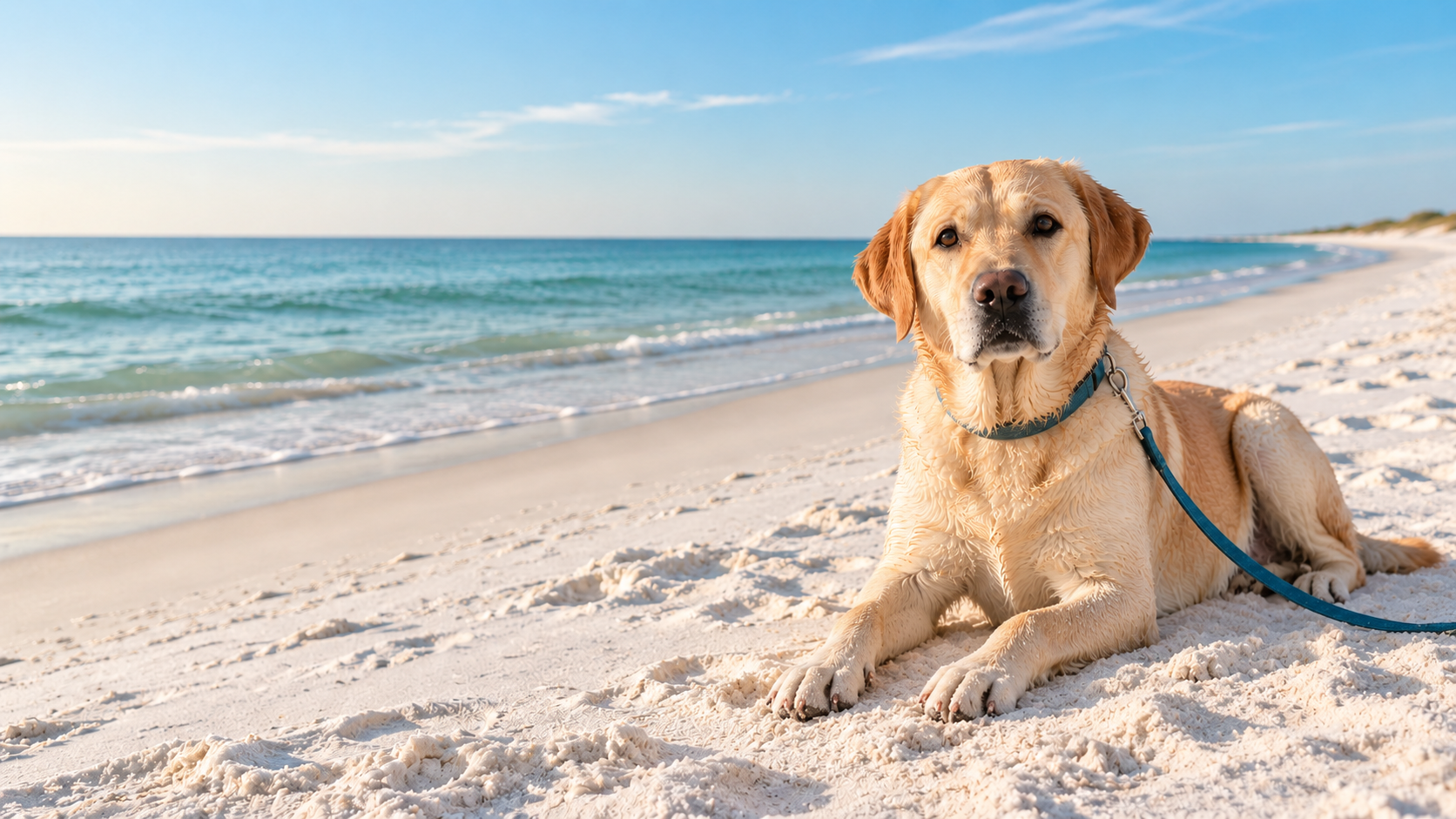
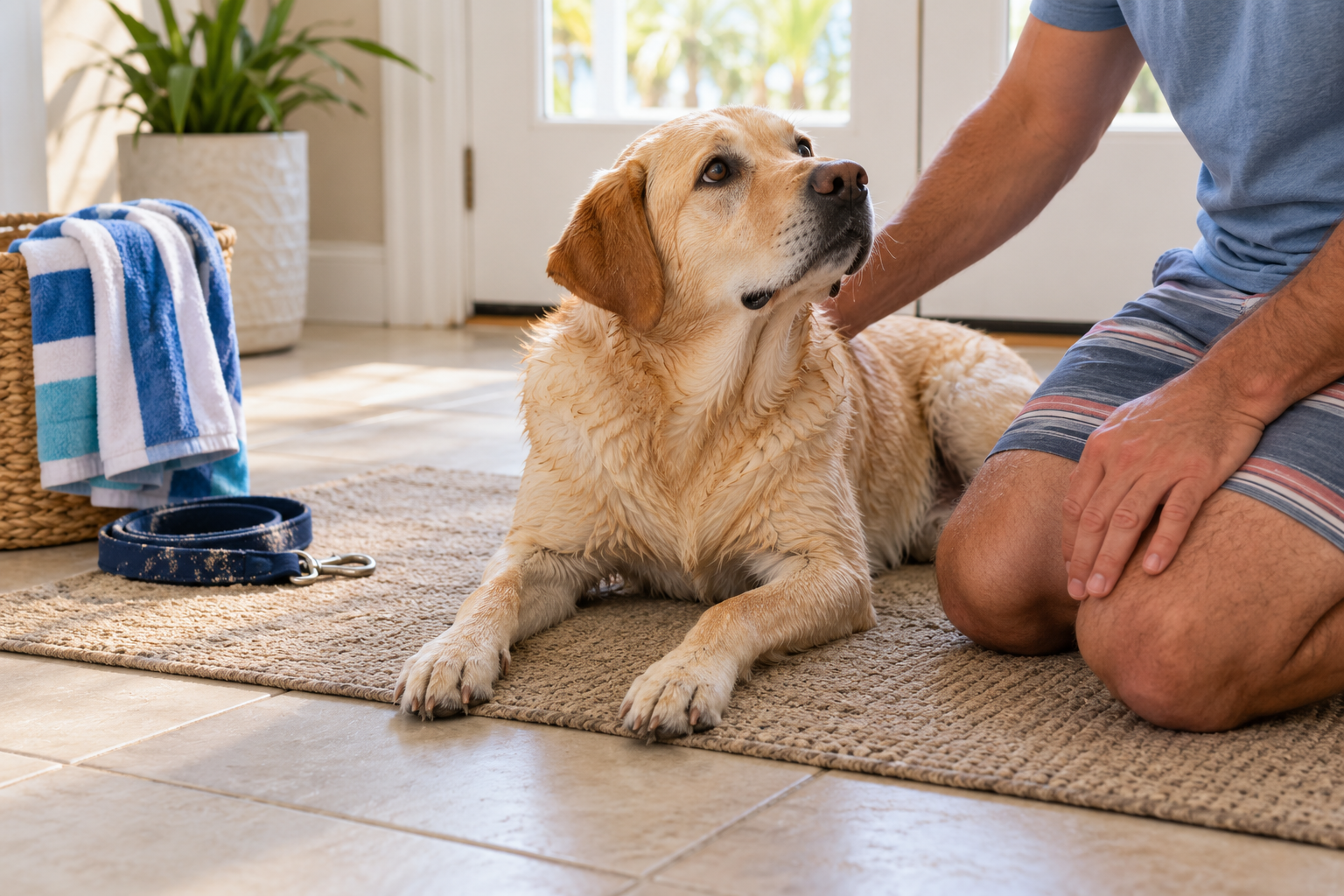
Pensacola beach days are a great way to spend time with your dog, but symptoms like vomiting, diarrhea, weakness, or excessive thirst afterward should never be ignored. Dogs can become sick after visiting the beach from swallowing salt water, ingesting sand, overheating, or exposure to marine toxins.
If your dog is acting sick after the beach, possible causes include:
- Salt Water Toxicity: Swallowing ocean water can cause dangerous sodium spikes.
- Sand Impaction: Swallowed sand can accumulate and block the intestinal tract.
- Heatstroke: High temperatures and humidity can lead to life-threatening overheating.
- Red Tide & Toxins: Ingesting contaminated water, foam, or dead fish can cause severe illness.
The right response depends on what your dog was exposed to and how severe their symptoms are.
Salt Water Toxicity and Sand Impaction
Salt water is one of the biggest concerns for beachgoing dogs. Drinking ocean water can cause mild stomach upset, but ingesting larger amounts can dangerously raise sodium levels in the blood (hypernatremia). Early signs of salt water poisoning include vomiting, diarrhea, lethargy, excessive thirst, and increased urination. More serious salt toxicity can cause poor coordination, tremors, seizures, or collapse.
Sand can also cause severe digestive issues. Dogs may swallow sand while digging, licking their paws, or repeatedly picking up sandy toys. If enough sand builds up in the digestive tract, it can form an impaction. Signs of a sand impaction include repeated vomiting, dehydration, abdominal pain, and a sudden loss of appetite.
Signs of Heatstroke in Dogs
Pensacola’s intense sun and humidity can take a toll even after you leave the beach. Heatstroke is a life-threatening veterinary emergency. Warning signs include heavy panting, excessive drooling, bright red gums, vomiting, weakness, poor coordination, and collapse.
If you suspect heatstroke, move your dog out of the heat immediately. Begin cooling immediately by wetting their body with cool tap water and keeping air moving over them with a fan or air conditioning, while arranging emergency veterinary care. Do not delay cooling while trying to find water at a particular temperature.
Florida Red Tide and Beach Debris
Florida red tide (Karenia brevis blooms) can affect pets locally. During an active bloom, keep your dog out of affected water and away from dead fish and sea foam. If your dog swims in affected water, prevent them from licking their coat and rinse them off thoroughly with fresh water as soon as possible. Dogs can easily ingest marine toxins while licking their coat clean.
Additionally, beach debris, decaying marine life, and sharp shells can cause serious gastrointestinal illness or internal injuries. If you know or suspect your dog scavenged something they shouldn’t have, tell your veterinarian exactly what happened.
When to Seek Veterinary Care
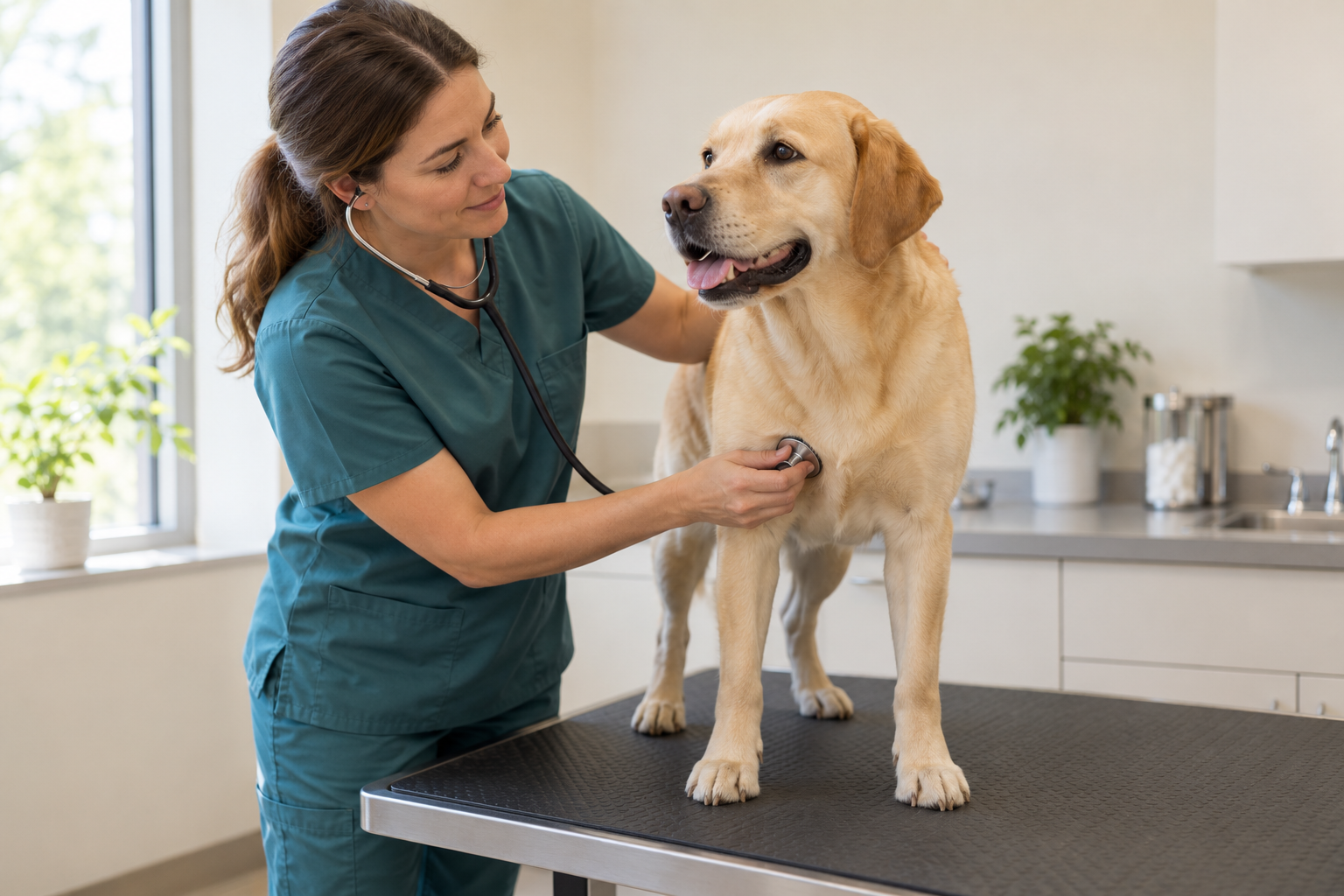
Call a veterinarian immediately if you suspect salt poisoning or marine toxin exposure, even before symptoms appear. Contact a veterinarian if your dog experiences repeated vomiting or diarrhea, refuses to eat or drink normally, seems painful, is unusually lethargic, or if their symptoms are worsening. Seek emergency veterinary care immediately for collapse, seizures, severe weakness, difficulty walking, breathing problems, or any signs of heatstroke.
At Olive Branch Pet Hospital, a physical examination can help determine whether your dog’s post-beach symptoms require medical treatment. Depending on the clinical findings, our in-house diagnostic services—such as blood chemistry, urinalysis, or ultrasound—may help assess hydration, check for electrolyte imbalances, evaluate organ function, or identify a suspected intestinal blockage.
If your dog does not seem like themselves after a beach day, call Olive Branch Pet Hospital in Pensacola to discuss the safest next step.