
Dog Vomiting After the Beach: When It’s Serious

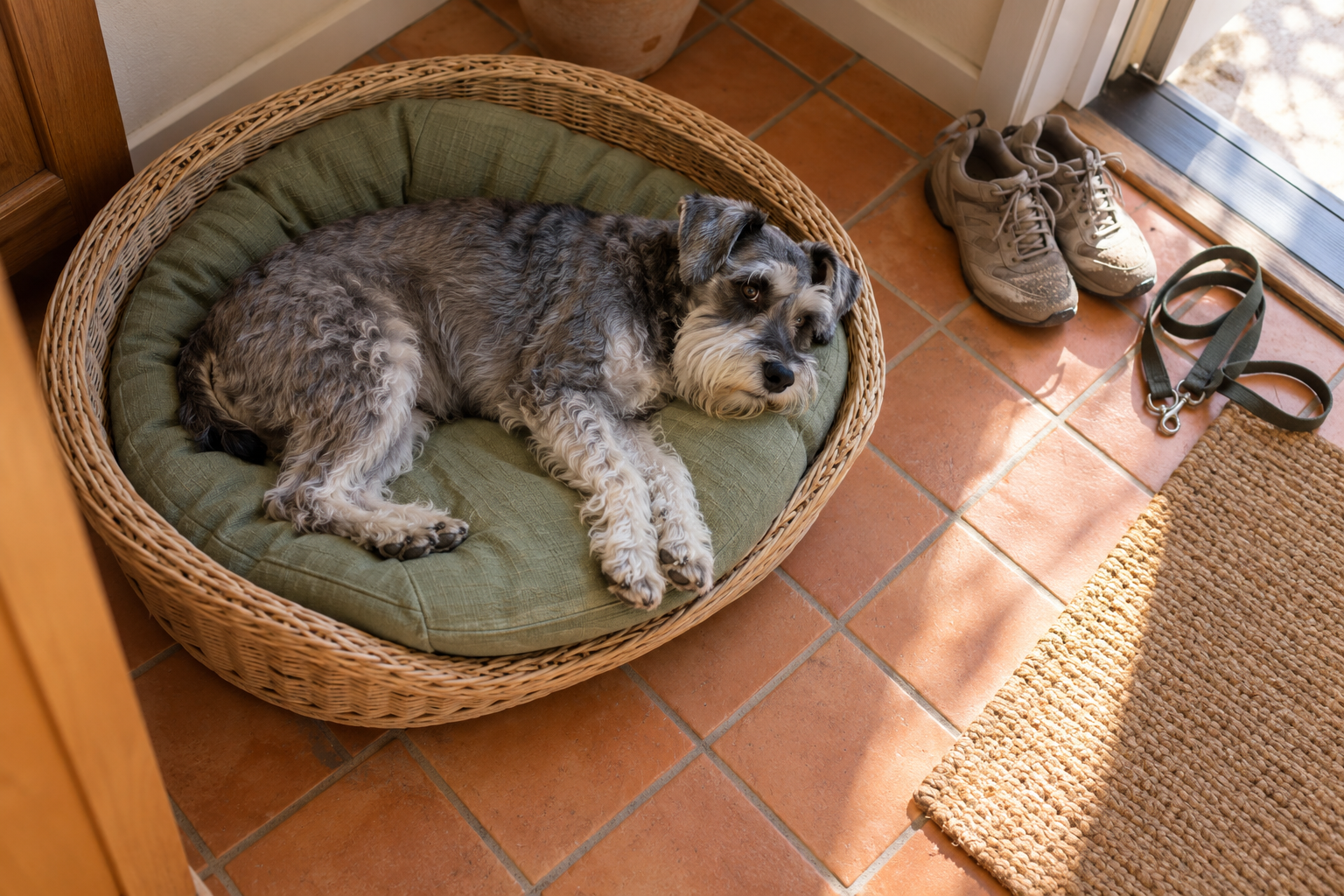
Salt-and-pepper schnauzer resting in a woven dog bed near sandy shoes and a leash.

Dog Vomiting After the Beach: When It’s Serious

A beach day can end with a tired, sandy dog and, sometimes, an upset stomach. If your dog vomits after a trip to the beach, the most important questions are how often it is happening, what your dog may have swallowed, and whether any other symptoms are developing.

One isolated episode of vomiting in an otherwise bright, comfortable adult dog may be something you can closely monitor at home, provided there is no suspected toxin or foreign-object ingestion or heat-related illness. However, repeated vomiting, unusual behavior, or trouble keeping water down deserves prompt veterinary attention.

Why Would a Dog Vomit After Going to the Beach?

Several hazards common to the Gulf Coast can cause gastrointestinal distress in dogs:

  • Saltwater Ingestion: Swallowing seawater while swimming or playing in the surf can cause stomach upset. While small amounts may cause minor irritation, larger amounts can raise sodium levels in the blood, leading to salt toxicosis (hypernatremia). Dogs with significant salt exposure may develop vomiting, diarrhea, weakness, poor coordination, tremors, or seizures.
  • Sand Ingestion: Dogs can accidentally swallow sand while digging, carrying sandy toys, or repeatedly licking their muzzle. Enough sand or beach debris can irritate the digestive tract or contribute to an intestinal blockage; a buildup of sand is called sand impaction. Vomiting accompanied by abdominal pain, loss of appetite, lethargy, or straining to pass stool should not be ignored.
  • Heat-Related Illness: Pensacola’s heat and humidity add another layer of concern. Vomiting can be a sign of heat-related illness, including heatstroke, especially when accompanied by heavy panting, excessive drooling, weakness, red or dark gums, difficulty breathing, or collapse.
  • Red Tide Exposure: Florida beachgoers must be cautious during red tide events. The Florida Fish and Wildlife Conservation Commission advises keeping pets away from dead fish and accumulated foam during a bloom, as swallowed brevetoxins can cause neurological and gastrointestinal illness. Breathing in aerosolized toxins can also cause respiratory irritation.

When Is Vomiting After the Beach an Emergency?

Seek veterinary care immediately if your dog experiences any of the following warning signs:

  • Repeated vomiting or inability to keep water down
  • Blood in the vomit or stool
  • Marked lethargy, weakness, or collapse
  • A swollen, hard, or painful abdomen
  • Disorientation, tremors, or seizures
  • Difficulty breathing
  • Suspected ingestion of a toxin, dead fish, or foreign object

Note: Contact your veterinarian sooner for puppies and senior dogs.
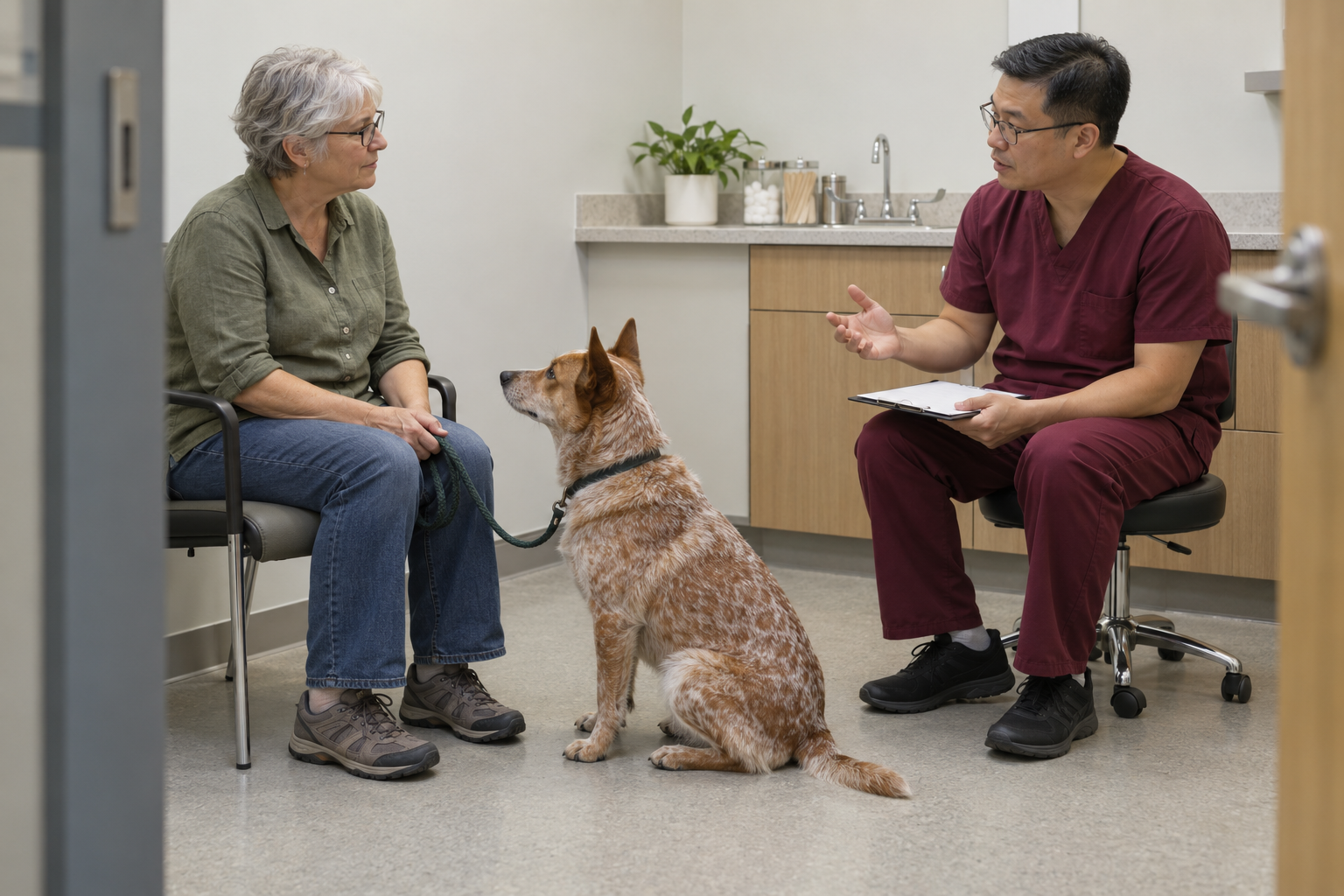
Owner discussing her cattle dog’s history with a veterinarian during a seated consultation.

How Can a Veterinarian Find the Cause?

Because vomiting is a symptom rather than a specific diagnosis, a physical examination and a careful history of what happened at the beach will guide the next steps. Depending on these findings, diagnostic testing may be needed to evaluate your dog’s hydration, electrolyte balance, organ function, or to check for a possible intestinal obstruction.

Olive Branch Pet Hospital in Pensacola offers comprehensive diagnostic services, including blood chemistry, urinalysis, ultrasound, and endoscopy. The specific tests recommended will be tailored to your dog based on their physical examination and current symptoms.

If your dog is vomiting after a Pensacola beach trip, especially if it happens repeatedly or comes with other warning signs, call Olive Branch Pet Hospital during office hours for a thorough veterinary evaluation. For an after-hours emergency, call VERC at (850) 477-3914.
Dog Sick After the Beach? What Pensacola Pet Owners Should Watch For

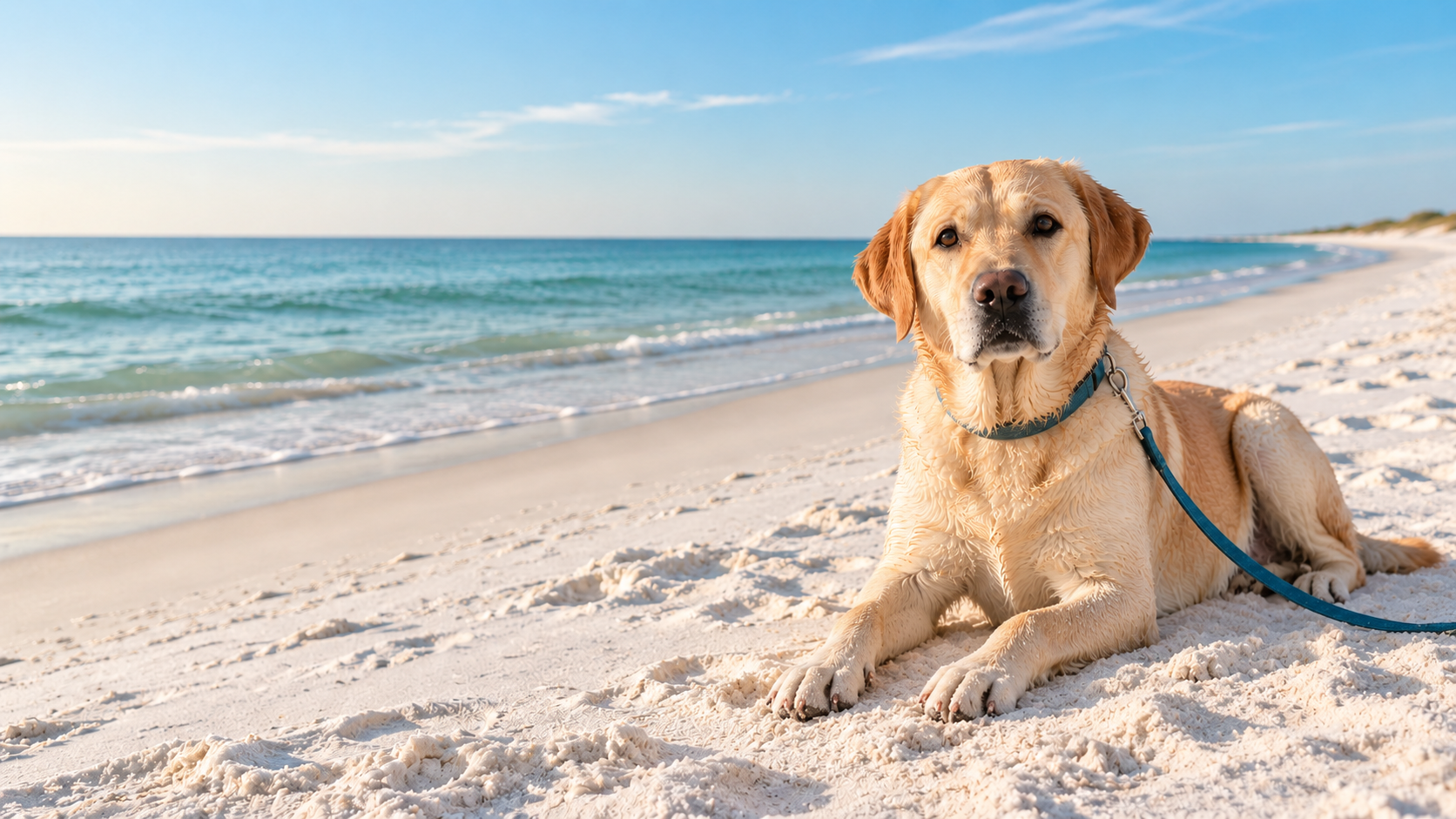
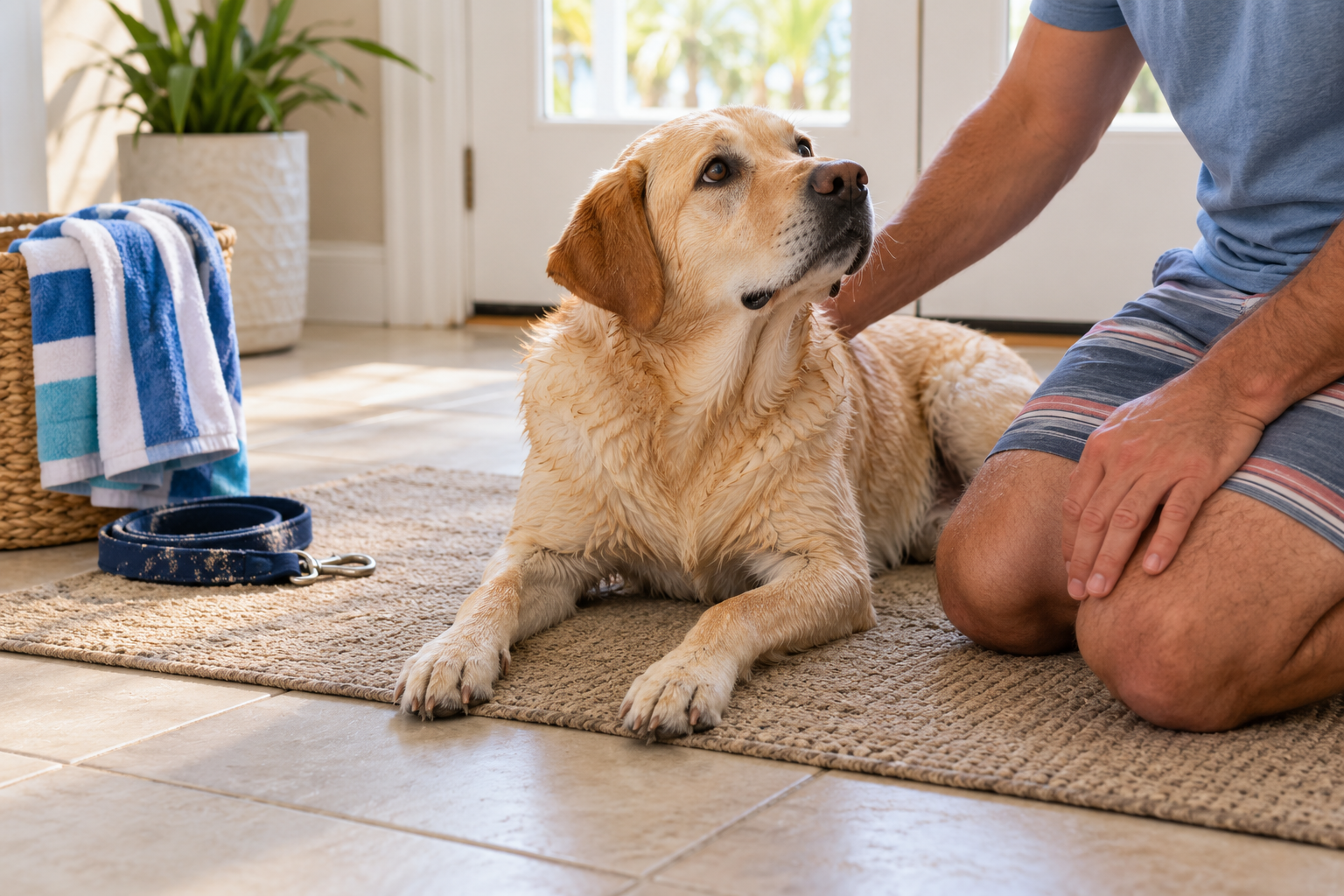
Owner sitting beside a damp yellow Labrador resting on a mat after a beach visit.

Pensacola beach days are a great way to spend time with your dog, but symptoms like vomiting, diarrhea, weakness, or excessive thirst afterward should never be ignored. Dogs can become sick after visiting the beach from swallowing salt water, ingesting sand, overheating, or exposure to marine toxins.

If your dog is acting sick after the beach, possible causes include:

  • Salt Water Toxicity: Swallowing ocean water can cause dangerous sodium spikes.
  • Sand Impaction: Swallowed sand can accumulate and block the intestinal tract.
  • Heatstroke: High temperatures and humidity can lead to life-threatening overheating.
  • Red Tide & Toxins: Ingesting contaminated water, foam, or dead fish can cause severe illness.

The right response depends on what your dog was exposed to and how severe their symptoms are.

Salt Water Toxicity and Sand Impaction

Salt water is one of the biggest concerns for beachgoing dogs. Drinking ocean water can cause mild stomach upset, but ingesting larger amounts can dangerously raise sodium levels in the blood (hypernatremia). Early signs of salt water poisoning include vomiting, diarrhea, lethargy, excessive thirst, and increased urination. More serious salt toxicity can cause poor coordination, tremors, seizures, or collapse.

Sand can also cause severe digestive issues. Dogs may swallow sand while digging, licking their paws, or repeatedly picking up sandy toys. If enough sand builds up in the digestive tract, it can form an impaction. Signs of a sand impaction include repeated vomiting, dehydration, abdominal pain, and a sudden loss of appetite.

Signs of Heatstroke in Dogs

Pensacola’s intense sun and humidity can take a toll even after you leave the beach. Heatstroke is a life-threatening veterinary emergency. Warning signs include heavy panting, excessive drooling, bright red gums, vomiting, weakness, poor coordination, and collapse.

If you suspect heatstroke, move your dog out of the heat immediately. Begin cooling immediately by wetting their body with cool tap water and keeping air moving over them with a fan or air conditioning, while arranging emergency veterinary care. Do not delay cooling while trying to find water at a particular temperature.

Florida Red Tide and Beach Debris

Florida red tide (Karenia brevis blooms) can affect pets locally. During an active bloom, keep your dog out of affected water and away from dead fish and sea foam. If your dog swims in affected water, prevent them from licking their coat and rinse them off thoroughly with fresh water as soon as possible. Dogs can easily ingest marine toxins while licking their coat clean.

Additionally, beach debris, decaying marine life, and sharp shells can cause serious gastrointestinal illness or internal injuries. If you know or suspect your dog scavenged something they shouldn’t have, tell your veterinarian exactly what happened.

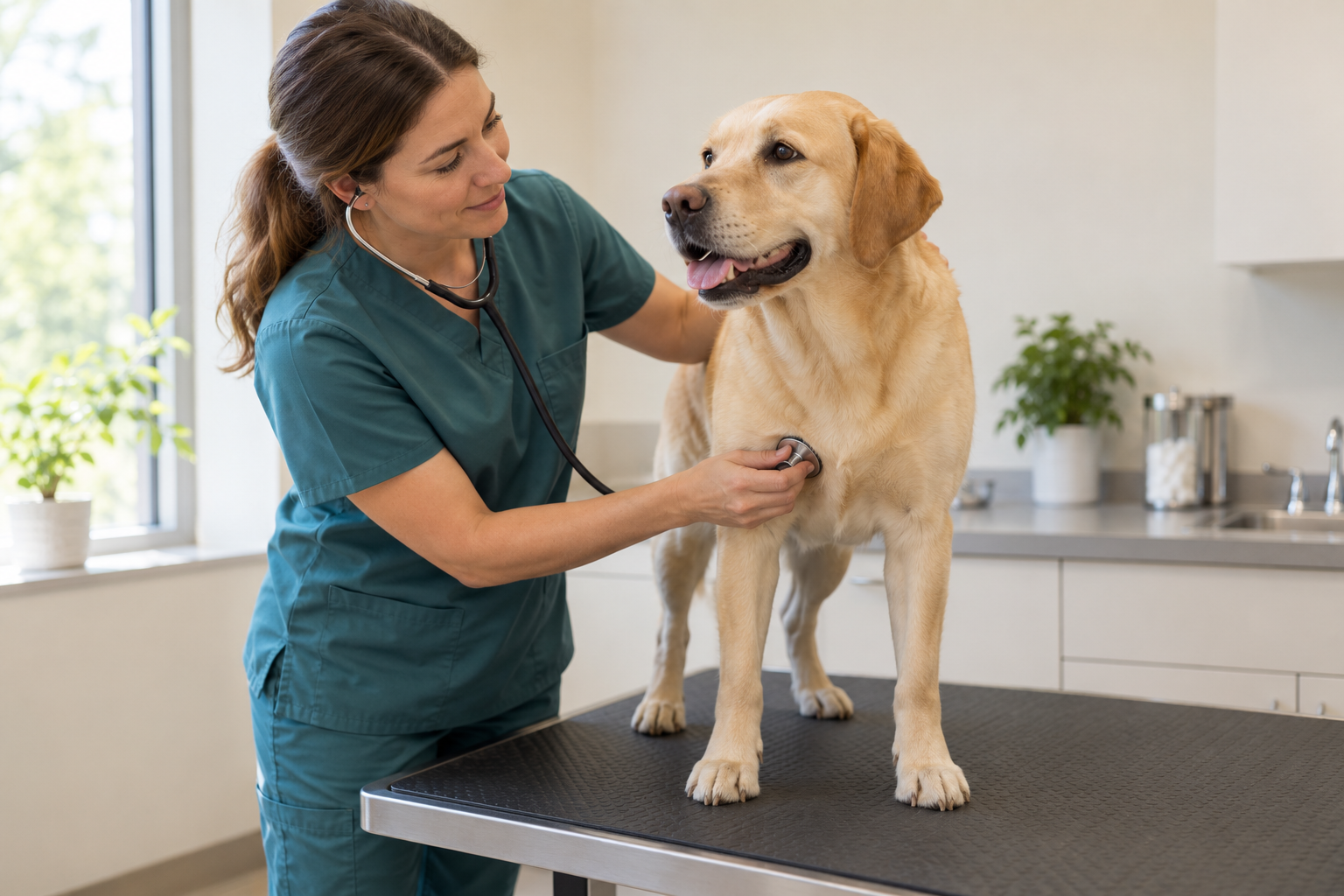
Veterinarian examining a yellow Labrador with a stethoscope in an exam room.

When to Seek Veterinary Care

Call a veterinarian immediately if you suspect salt poisoning or marine toxin exposure, even before symptoms appear. Contact a veterinarian if your dog experiences repeated vomiting or diarrhea, refuses to eat or drink normally, seems painful, is unusually lethargic, or if their symptoms are worsening. Seek emergency veterinary care immediately for collapse, seizures, severe weakness, difficulty walking, breathing problems, or any signs of heatstroke.

At Olive Branch Pet Hospital, a physical examination can help determine whether your dog’s post-beach symptoms require medical treatment. Depending on the clinical findings, our in-house diagnostic services—such as blood chemistry, urinalysis, or ultrasound—may help assess hydration, check for electrolyte imbalances, evaluate organ function, or identify a suspected intestinal blockage.

If your dog does not seem like themselves after a beach day, call Olive Branch Pet Hospital in Pensacola to discuss the safest next step.

Dog Heatstroke in Pensacola: When It Becomes an Emergency

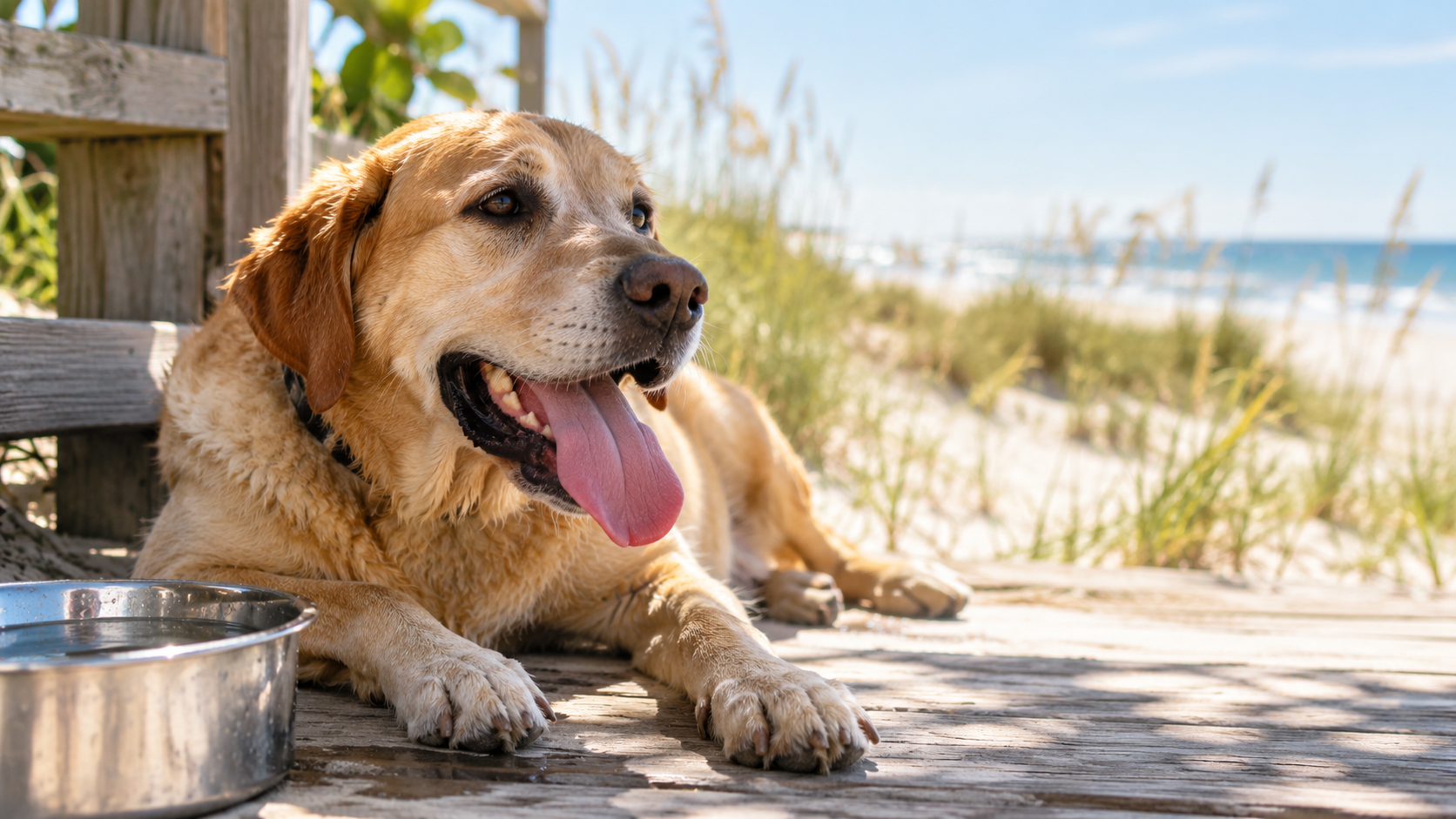
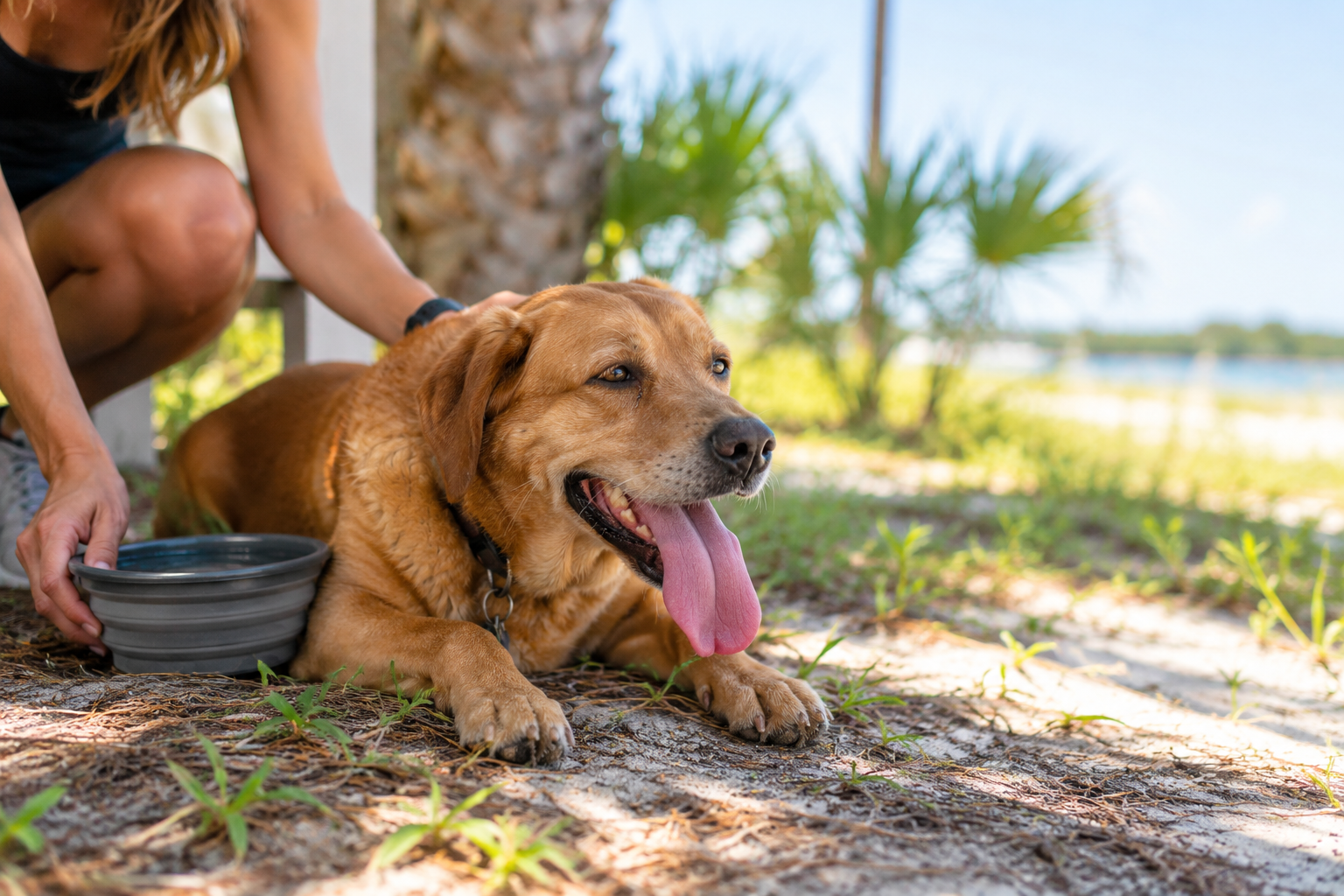
Overheated dog resting in the shade while being offered water

Dog Heatstroke in Pensacola: When It Becomes an Emergency

Pensacola’s hot, humid weather can put dogs at risk for heat-related illnesses faster than many pet owners expect. Heatstroke is more than simply “getting too hot.” It happens when a dog’s body temperature rises to a dangerous level and they can no longer cool themselves effectively.

Because dogs rely primarily on panting rather than sweating to regulate their body temperature, high heat, intense humidity, strenuous activity, poor ventilation, or a lack of shade can rapidly overwhelm their natural cooling system.

When Is Dog Heatstroke an Emergency?

Early dog overheating symptoms include heavy panting, excessive drooling, seeking shade, slowing down, or refusing to continue playing. If you notice these signs, move your dog to an air-conditioned or shaded area immediately and stop all activity.

Heatstroke should always be treated as a life-threatening veterinary emergency. Signs of heatstroke in dogs include:

  • Persistent or extreme panting
  • Difficulty breathing
  • Weakness, stumbling, or collapse
  • Confusion or unresponsiveness
  • Vomiting or diarrhea
  • Abnormal gum color (bright red, pale, or blue)
  • Seizures or loss of consciousness

Heatstroke can rapidly damage a dog’s kidneys, gastrointestinal tract, brain, and blood-clotting system. Because these internal complications can continue to develop after the initial event, a dog still needs a thorough veterinary evaluation even if they seem perfectly fine after cooling down.

How to Cool an Overheated Dog Safely

If you suspect your pet is suffering from heatstroke, immediate action is required:

  1. Get out of the heat: Move your dog indoors or into the shade immediately.

  2. Contact a veterinarian: Call for professional medical guidance right away.

  3. Begin gentle cooling: Apply cool (not cold) or room-temperature water to their paws, belly, and armpits. Keep air moving over them using a fan or air conditioning to encourage evaporation.

  4. Offer water safely: If your dog is alert and able to swallow normally, offer small amounts of cool drinking water. Do not force them to drink.

What NOT to do: Do not use an ice bath or very cold water. Extreme cold causes surface blood vessels to constrict, which paradoxically traps heat inside the body’s core. Additionally, do not tightly wrap your dog in wet towels. While loosely placing a damp cloth under the armpits or on the belly is helpful, wrapping them tightly traps heat and prevents crucial evaporation.

Which Dogs Are at Higher Risk?

Any dog can develop dog heatstroke in Pensacola, but the risk is significantly higher for certain pets:

  • Short-nosed (brachycephalic) breeds like Bulldogs, Frenchies, and Pugs
  • Senior dogs and puppies
  • Overweight dogs
  • Thick-coated breeds
  • Dogs with pre-existing heart or breathing conditions
  •  

Pensacola Veterinary Care for Heatstroke


At Olive Branch Pet Hospital, our team evaluates sick and injured pets and offers in-house veterinary diagnostics, including blood chemistry and urinalysis. These tests help our veterinarians assess internal organ function and determine if heat exposure has caused hidden complications.

When seeking emergency veterinary care during office hours, please call before arriving if you believe your dog is in a crisis. Olive Branch directs all after-hours emergencies to the Pensacola Emergency and Referral Center.

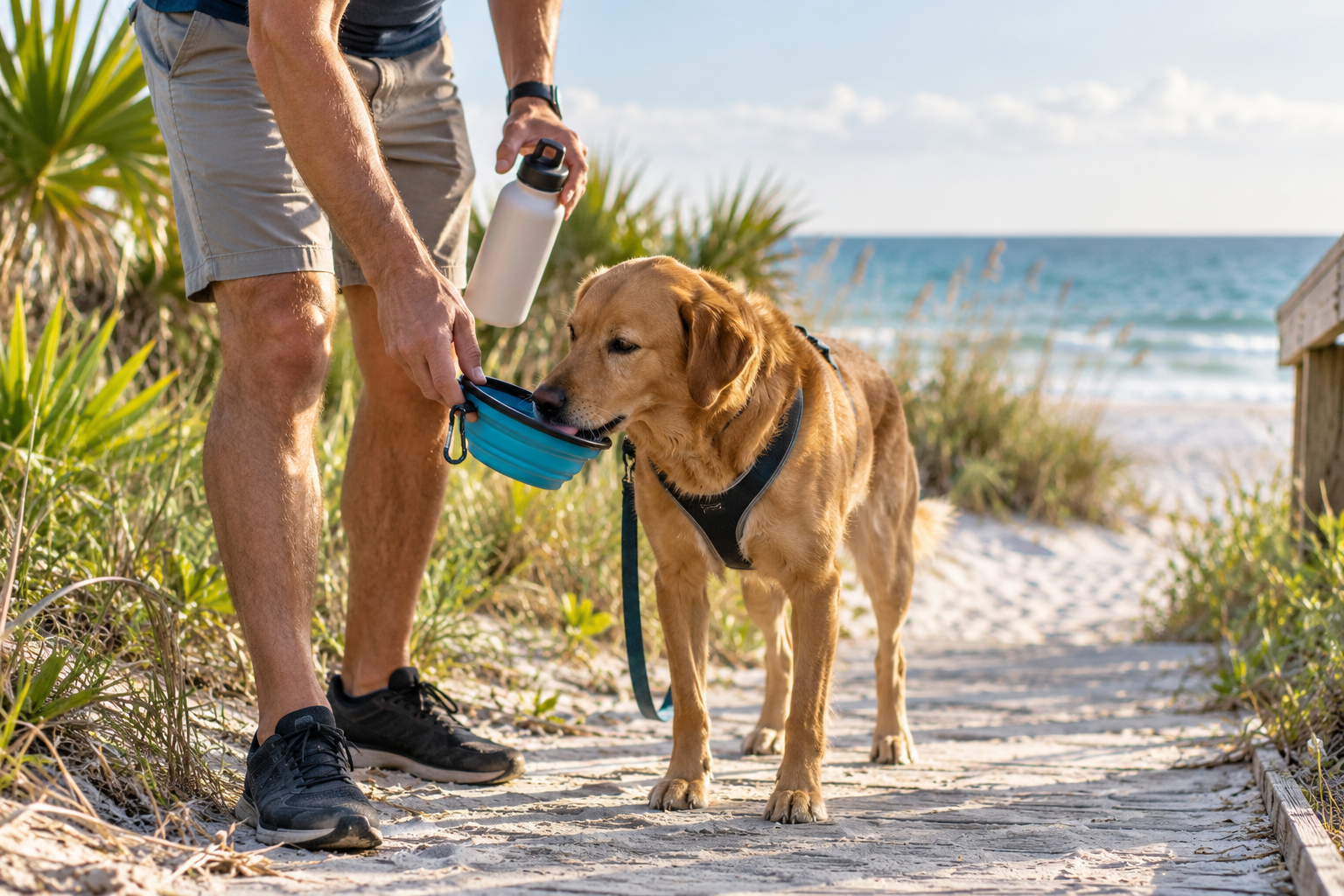
Dog drinking water during a beach walk in Pensacola

Prevention Tips for Pensacola Pet Owners

Prevention means scheduling walks and outdoor play for the cooler early morning or late evening hours. Provide constant access to fresh water and deep shade, take frequent rest breaks, and never leave a dog unattended in a parked vehicle. For more comprehensive advice, review our summer safety tips for pets in Pensacola.

If your dog is showing concerning signs after heat exposure, do not wait for symptoms to become severe. During office hours, call Olive Branch Pet Hospital before arriving; after hours, contact the Pensacola Emergency and Referral Center.

5 Things to Watch for When Taking Your Dog to the Beach

taking-your-dog-to-the-beach_strip1

5 Things to Watch for When Taking Your Dog to the Beach

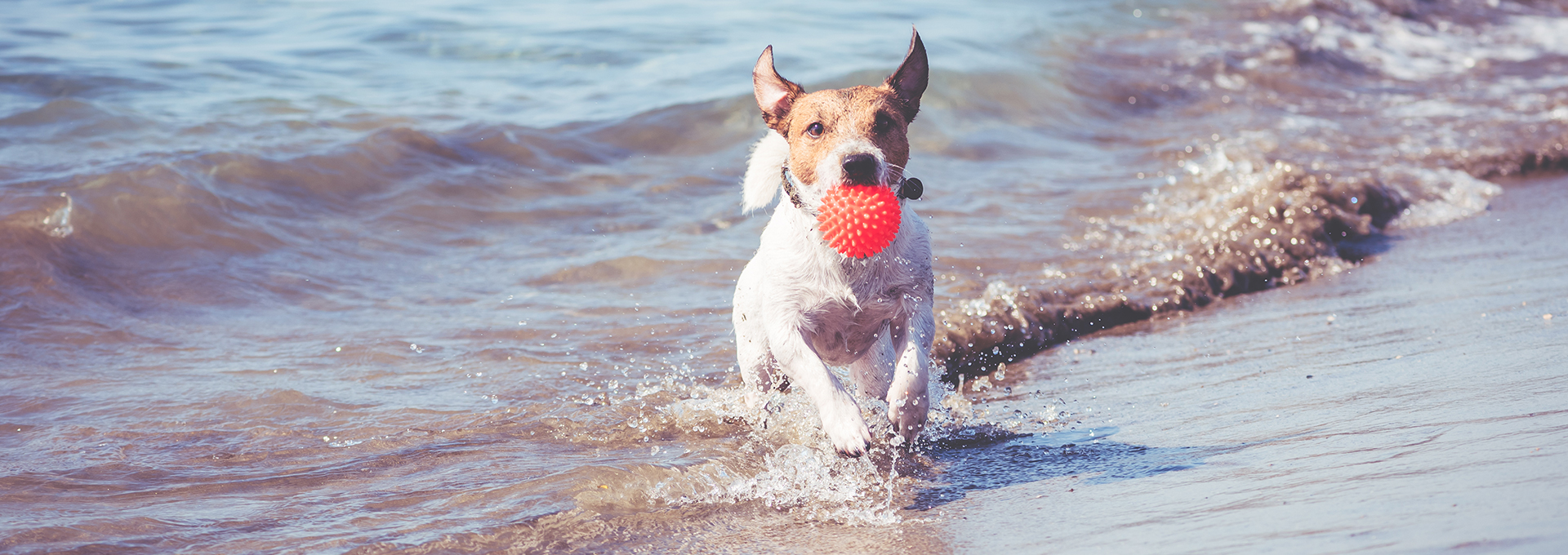
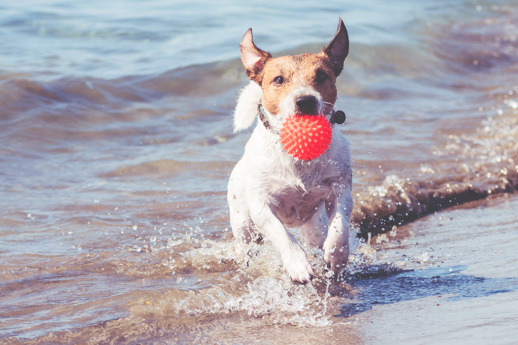
Splashing in the waves at the beach is a great summer activity for dogs in the summer heat of Pensacola. To ensure you and your dog have a fun and safe time, there are some precautions you should take when you visit the beach with your dog.

5 Things to Keep an Eye Out for When Taking Your Dog to the Beach

1. Signs of Heatstroke

Dogs can overheat quickly in the summer heat, so it’s important to find an area with shade and bring plenty of fresh water to keep your pet hydrated in the sun. Additionally, pay close attention to signs that your pet might be overheating, dehydrating, and developing heatstroke such as:
If your dog exhibits signs of heatstroke, immediately seek emergency veterinary care.

2. Beach Rules

Before you take to the beach with your dog, make sure you are both welcome. Not all beaches allow dogs, and you don’t want to incur a fine when you could have checked the rules and then simply visited a different beach that does allow dogs.

3. Sunburn

Dogs are susceptible to sunburn on the skin beneath their coats. Don’t trim your dog’s hair shorter than one inch and use a dog-safe sunscreen to protect your pup’s skin at the beach.

4. Salt Poisoning

Too much salt is toxic for dogs, and drinking too much ocean water can lead to salt poisoning. Bring fresh water to the beach for your dog to drink and keep a close eye on them to make sure they aren’t drinking ocean water.

5. Water Conditions and Wildlife

Rough waves, dangerous currents, jellyfish, or stingrays can all make the ocean dangerous for your pet. Pay close attention to water condition notices or talk with a lifeguard before jumping in with your pet.

Summer Safety at Olive Branch Pet Hospital

At Olive Branch Pet Hospital, we have everything you need to keep your pet safe, secure, and healthy this summer including vaccinations, parasite prevention, and pet microchips. To learn more about summer beach safety for pets or to schedule a wellness exam for your dog or cat, we welcome you to contact our veterinary hospital in Pensacola today.
taking-your-dog-to-the-beach_strip3