

When Your Vet Recommends Endoscopy: What It Means

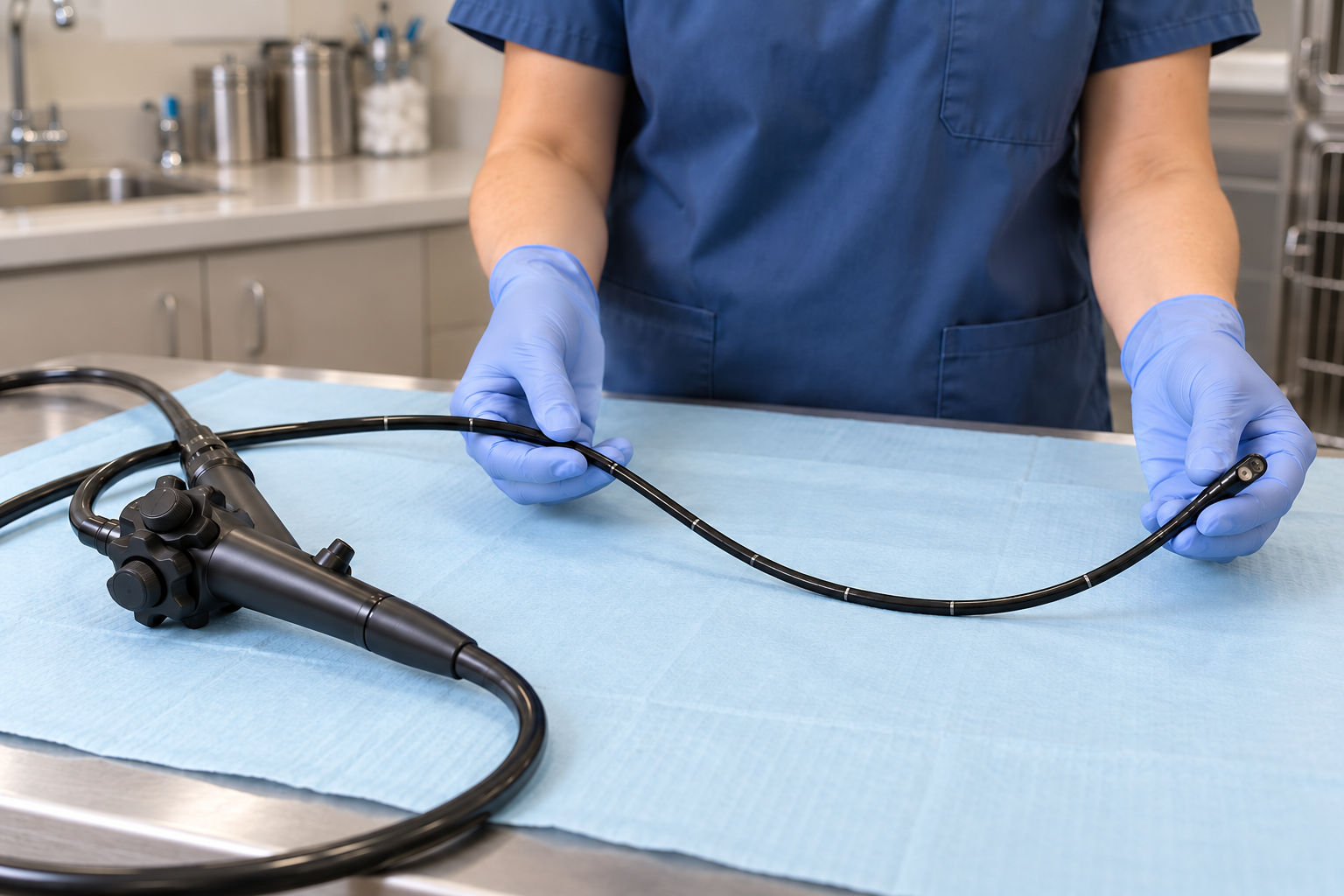
Gloved veterinary professional holding the flexible tube and camera tip of an endoscope.

When Your Vet Recommends Endoscopy: What It Means

Pet endoscopy is a minimally invasive diagnostic procedure that allows a veterinarian to examine the inside of your pet’s digestive tract. By passing a flexible tube with a small camera into the body, veterinarians can directly view areas such as the esophagus, stomach, upper small intestine, or colon. It also allows the veterinarian to collect tiny tissue samples (biopsies) and, in select cases, retrieve swallowed objects without open abdominal surgery. At Olive Branch Pet Hospital in Pensacola, endoscopy is one of the advanced diagnostic tools available for evaluating your pet’s digestive system.

Why Would a Dog or Cat Need Endoscopy?

Your veterinarian may recommend gastrointestinal endoscopy if your dog or cat experiences persistent or recurring digestive symptoms, such as:
  • Chronic vomiting or diarrhea
  • Unexplained weight loss
  • Reduced appetite or difficulty swallowing
  • Abdominal discomfort
Often, endoscopy is not the first diagnostic test performed. A physical examination, bloodwork, or an ultrasound typically helps determine whether looking directly inside the gastrointestinal tract is the logical next step.

What Can Endoscopy Find?

An endoscope provides a real-time view of the gastrointestinal lining. During the procedure, veterinarians look for:

  • Inflammation or abnormal swelling
  • Masses, tumors, or polyps
  • Scar tissue or narrowing (strictures)
  • Ulcers or erosions
  • Ingested foreign objects

One of the biggest advantages of veterinary endoscopy is the ability to take biopsies through the scope. These small tissue samples are evaluated under a microscope, which is crucial because many gastrointestinal diseases cause microscopic changes even when the surface tissue looks relatively normal to the naked eye.

If a foreign object is located in an accessible area—like the esophagus or stomach—it may sometimes be removed using tiny instruments passed through the endoscope. However, if the object has moved too far into the intestines or cannot be safely grasped, veterinary surgery may still be necessary.

Does Endoscopy Require Anesthesia?

Yes. For gastrointestinal endoscopy in dogs and cats, general anesthesia is required. This ensures the scope can be passed safely, keeping your pet completely still and pain-free so the veterinarian can perform a thorough examination.

Your veterinary team will likely recommend pre-anesthetic testing and provide specific fasting and preparation instructions based on your pet’s health. Endoscopy is considered minimally invasive because it reaches the digestive tract through natural openings rather than an abdominal incision. Still, it is a medical procedure with anesthesia-related and procedural risks, so the decision is always based on a careful assessment of your pet’s diagnostic needs.
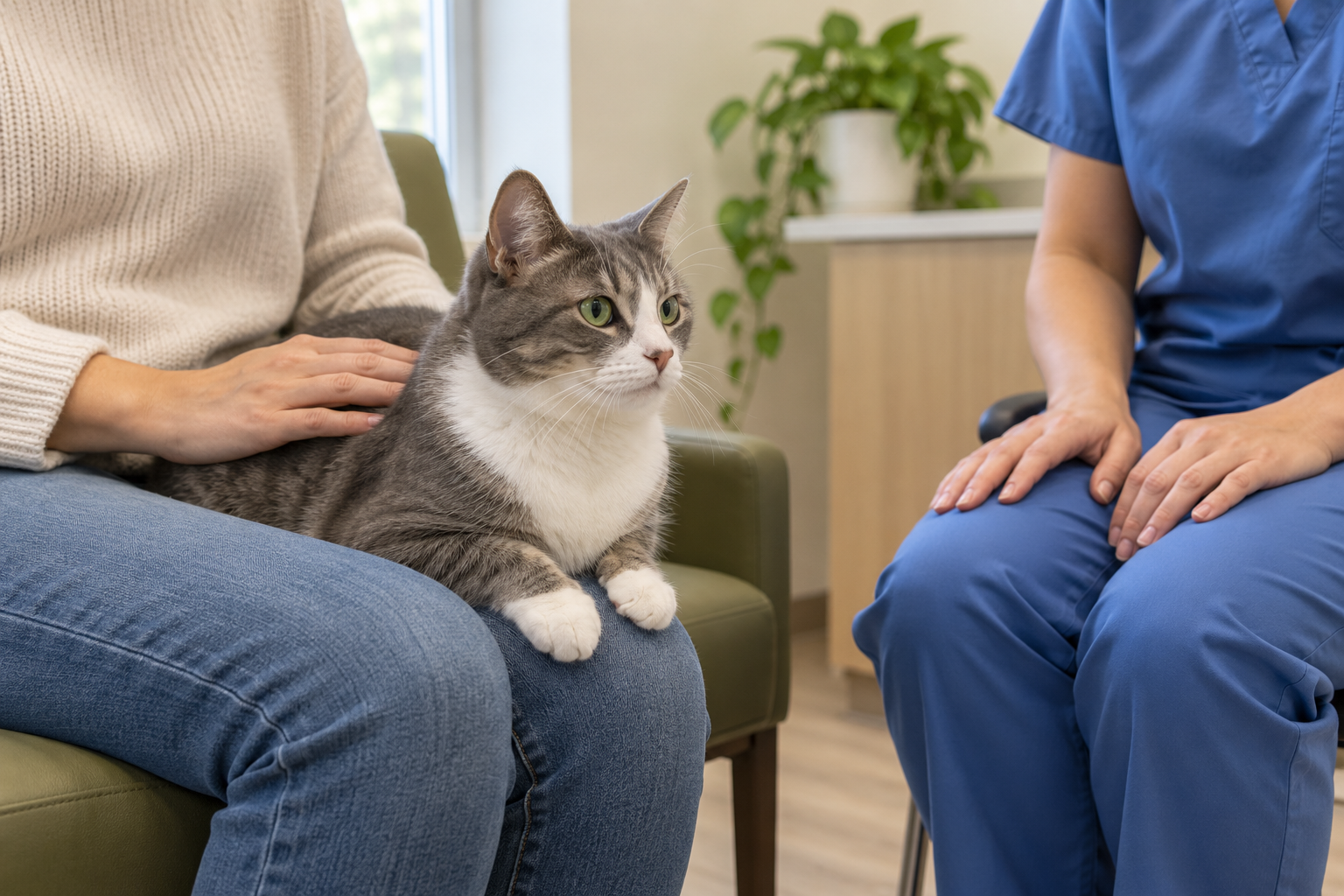
Gray-and-white cat sitting on its owner’s lap during a veterinary consultation.

What Happens After the Procedure?

While structural abnormalities or foreign objects are visible immediately during the procedure, biopsy results take additional time because the tissue must be sent to a laboratory for microscopic evaluation. Your veterinarian will use those results, along with the rest of your pet’s diagnostic workup, to create a targeted treatment plan.

If your pet has persistent digestive symptoms or endoscopy has been recommended, contact Olive Branch Pet Hospital in Pensacola to discuss the appropriate next diagnostic step.

Heart Murmur in Dogs: What an EKG Actually Tells You

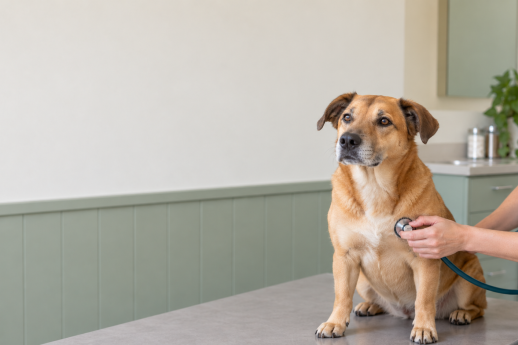
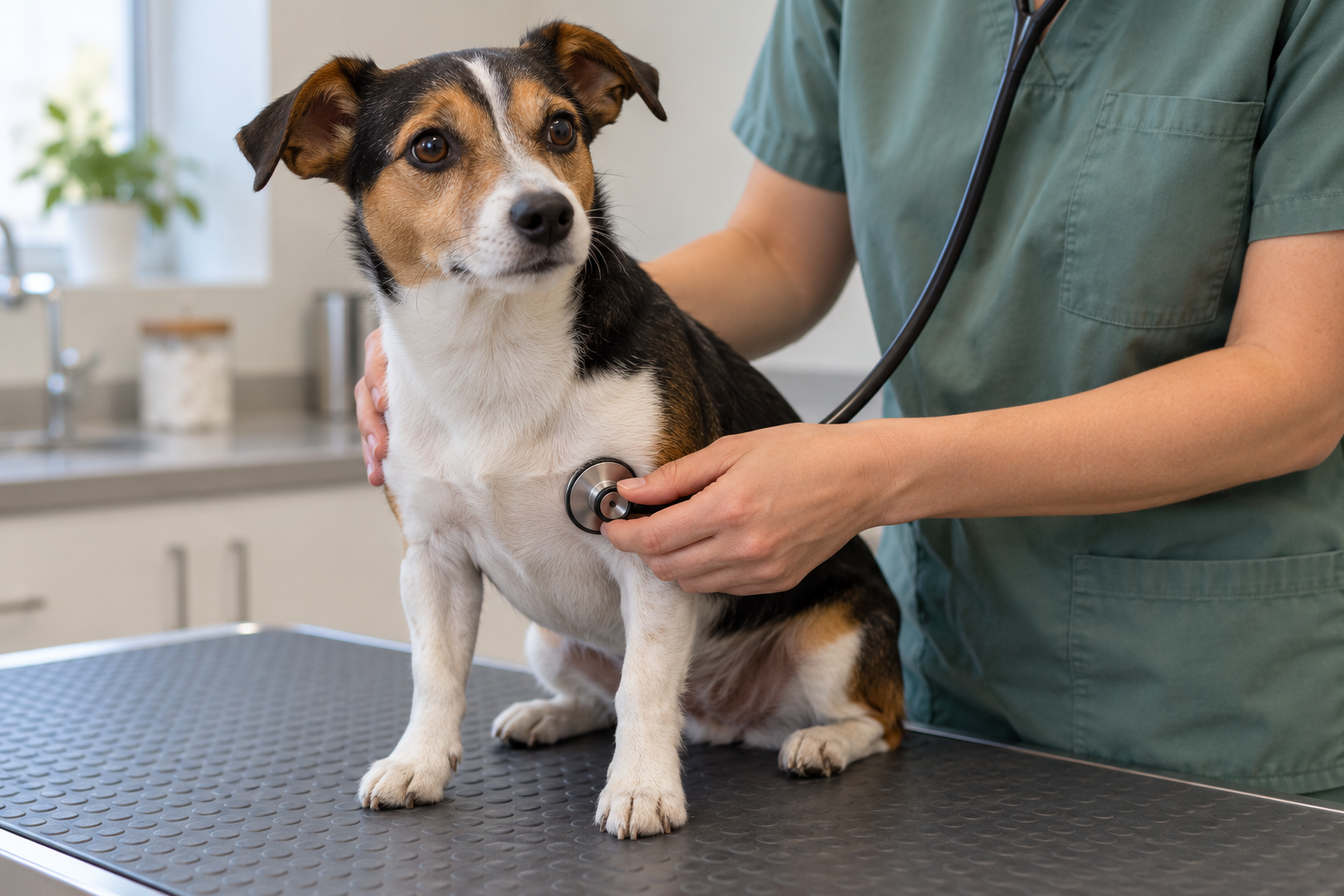
Tricolor terrier sitting on an exam table while a veterinary professional listens to its chest.

Heart Murmur in Dogs: What an EKG Actually Tells You

A heart murmur in a dog means your veterinarian hears turbulent blood flow through or near the heart using a stethoscope. It is a sound, not a specific disease. When a murmur is detected, pet owners often wonder if an EKG (electrocardiogram) is the next step.

An EKG answers a very specific question: Is the dog’s heart producing a normal electrical rate and rhythm?

That distinction is critical. A dog can have a loud heart murmur with a perfectly normal EKG. Conversely, a dog can have an abnormal EKG without any audible heart murmur. Because a normal EKG does not rule out structural heart disease, understanding what this diagnostic test actually does—and doesn’t do—can help you make informed decisions about your pet’s cardiac health.

What Does an EKG Show in a Dog?

An EKG is a noninvasive veterinary diagnostic test that records the electrical signals triggering each heartbeat. By placing small electrodes on the dog’s body, the machine generates a tracing of the heart’s electrical activity.

This test is excellent at identifying canine arrhythmias (abnormal rhythms). An EKG can detect:

  • Heart rates that are abnormally fast (tachycardia) or too slow (bradycardia).
  • Premature beats and skipped beats.
  • Electrical conduction blocks.

This tool is incredibly useful if a veterinarian hears an irregular rhythm during a routine wellness exam, or if a dog presents with symptoms like sudden weakness, fainting (syncope), exercise intolerance, or episodes of collapse.


Can an EKG Diagnose the Cause of a Heart Murmur?

Usually, an EKG cannot diagnose the cause of a murmur by itself. A heart murmur may reflect a leaky heart valve or a congenital defect, but some murmurs occur without structural heart disease.

An EKG evaluates electrical conduction, not physical structure. It does not take a picture of the heart, measure how a valve is moving, or show blood flow. To investigate the cause of a heart murmur, your veterinarian may recommend an echocardiogram (a heart ultrasound) to look inside the heart. Chest X-rays may also help evaluate heart size and check for fluid in the lungs.

Does Every Dog With a Heart Murmur Need an EKG?

Not necessarily. The appropriate diagnostic workup depends on the individual dog’s symptoms, age, breed, examination findings, and the grade (loudness) of the murmur.

For example, some low-grade murmurs are discovered during routine wellness exams in dogs that feel completely fine. In these cases, your vet might recommend baseline imaging or simply close monitoring. However, if the murmur occurs alongside coughing, labored breathing, or fainting episodes, further veterinary evaluation is needed. If an abnormal rhythm is heard or suspected, an EKG helps identify rhythm disturbances.

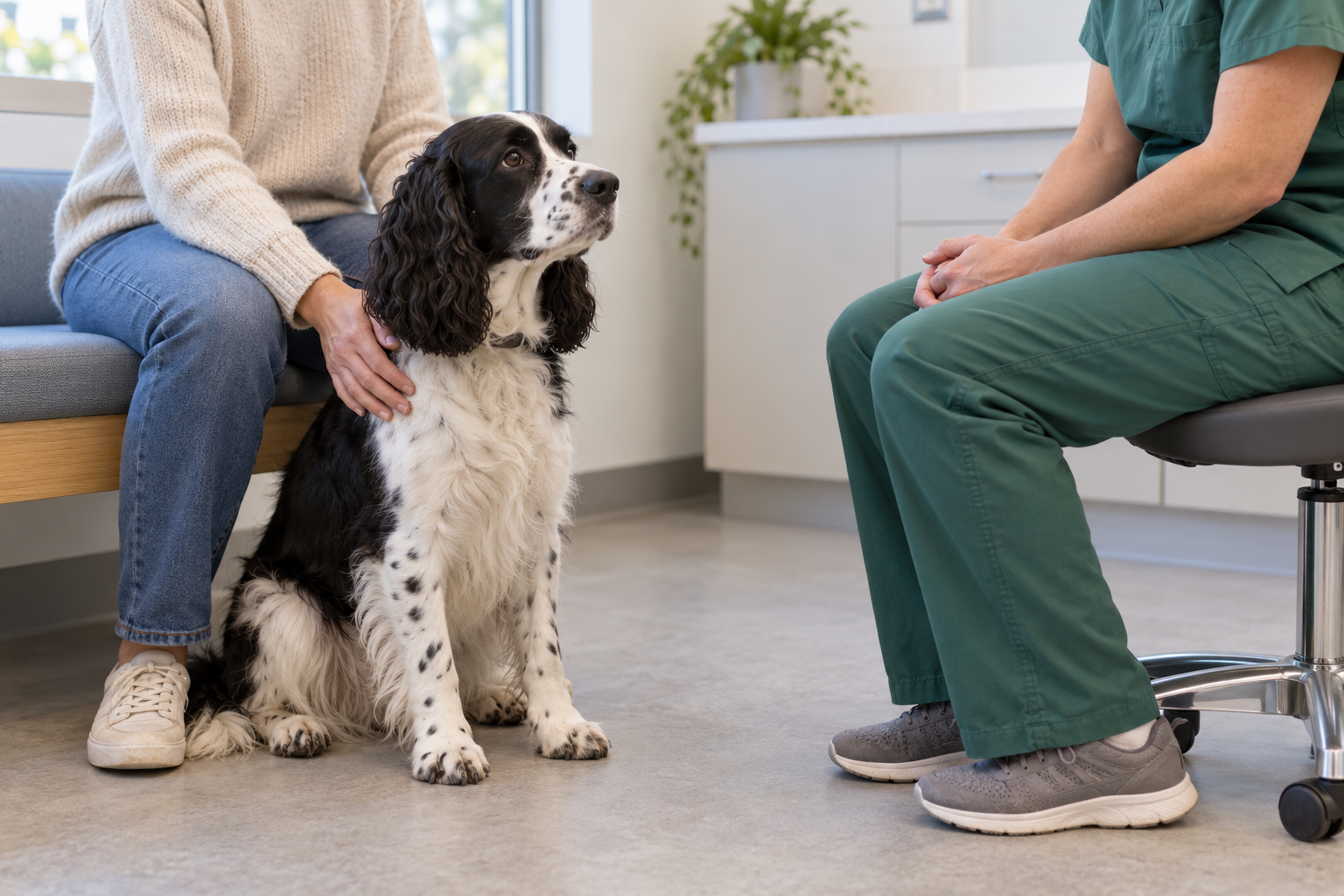
Black-and-white spaniel sitting beside its owner during a veterinary consultation.

When to Seek Veterinary Care

If your dog has a newly detected heart murmur, it is important to follow your veterinarian’s recommended diagnostic and monitoring plan. Seek prompt emergency veterinary attention if your dog experiences fainting, collapse, a bluish tint to the gums, severe coughing, or sudden difficulty breathing.

At Olive Branch Pet Hospital in Pensacola, we provide comprehensive in-house veterinary diagnostic services, including bloodwork, ultrasound, and EKG testing. Our experienced team can evaluate your dog’s heart health and recommend the most effective steps for their specific needs.

If your dog has a new heart murmur, an irregular heartbeat, or is showing signs of fatigue, schedule an appointment with Olive Branch Pet Hospital in Pensacola to determine whether an EKG or additional diagnostics are appropriate.

What To Do If You Find A Stray Animal?

finding-a-stray-animal_strip1

What To Do if You Find a Stray Animal?

If you love animals as much as we do, then your first instinct upon spotting a stray animal is probably to try to help. However, attempting to help a stray animal without a plan and without thinking first could get you or the animal hurt.
Consider the following advice, so you’ll know exactly what to do the next time you spot a pet on the loose.

What to Do When You Find a Stray Animal

The best thing you can do when you see a stray animal is to contain it safely until you can either contact animal control or take it to an animal shelter or a veterinary clinic to have it scanned for a microchip and examined.
You should always approach a stray animal with caution. Walk slowly and speak to it gently to try to coax it into approaching you first.
Try to put a stray dog on a leash and contain a stray cat in a carrier or box with holes. If you can, contain the animal inside a fenced yard or your car (if you can leave it running with the air conditioning on).
If you can’t safely restrain the animal, contact animal control for assistance. While you wait, carefully direct traffic to slow down in the area and keep a close eye on the location of the animal in case it gets frightened and runs away.
Once the animal is contained, check to see if it has a collar and tags and try to contact the owners. If there are no ID tags, you should first take the animal to a veterinary clinic or animal shelter to have it scanned for a microchip.
You can also try to locate the owners by posting pictures on lost pet boards and with the local animal shelters.
Before you decide to take the animal home, make sure you’re prepared to care for a new pet.

Prevent Unwanted Litters – Spay and Neuter Surgery at Olive Branch Pet Hospital

Spaying and neutering our pets is the best way to prevent unwanted litters, stray pets, and overcrowded animal shelters. Plus, spaying and neutering help keep your dogs and cats happy and healthy, too!
To learn more about spaying or neutering your new pet or to schedule an appointment, we welcome you to contact Olive Branch Pet Hospital in Pensacola.
finding-a-stray-animal_strip3