





If your veterinarian recommends a dental cleaning for your dog, it is normal to wonder what actually happens once your pet leaves the exam room. A professional veterinary dental cleaning is much more than merely scraping visible tartar from the teeth.
What happens during a dog dental cleaning? A comprehensive procedure typically includes a pre-anesthetic exam, general anesthesia, a complete oral evaluation, ultrasonic scaling above and below the gumline, and teeth polishing.
This thorough process allows the veterinary team to examine the entire mouth and identify dental problems that may be missed while a dog is awake. At Olive Branch Pet Hospital, our dog dentistry services in Pensacola include everything from preventative oral care to veterinary tooth extractions when needed.
Step 1: Pre-Anesthetic Evaluation and Diagnostics
Dental care begins before any cleaning takes place. Your veterinarian will examine your dog’s mouth and evaluate their overall health. Dr. Mark Sprayberry and our team recommend bloodwork before your pet undergoes anesthesia. Using our in-house blood chemistry and diagnostic testing, we evaluate organ function to help tailor the anesthetic plan and reduce risk.
Step 2: General Anesthesia and Monitoring
A complete veterinary dental procedure requires access beneath the gumline, where periodontal disease can develop. The American Animal Hospital Association (AAHA) guidelines call for general anesthesia with airway protection and appropriate monitoring for comprehensive dental cleanings.
A dog dental cleaning under anesthesia keeps your pet still and prevents the stress of probing sensitive areas. Pain management is tailored to the procedure. AAHA recommends monitoring vital signs, including heart rate and oxygen levels, throughout anesthesia and recovery.
Step 3: Comprehensive Oral Examination
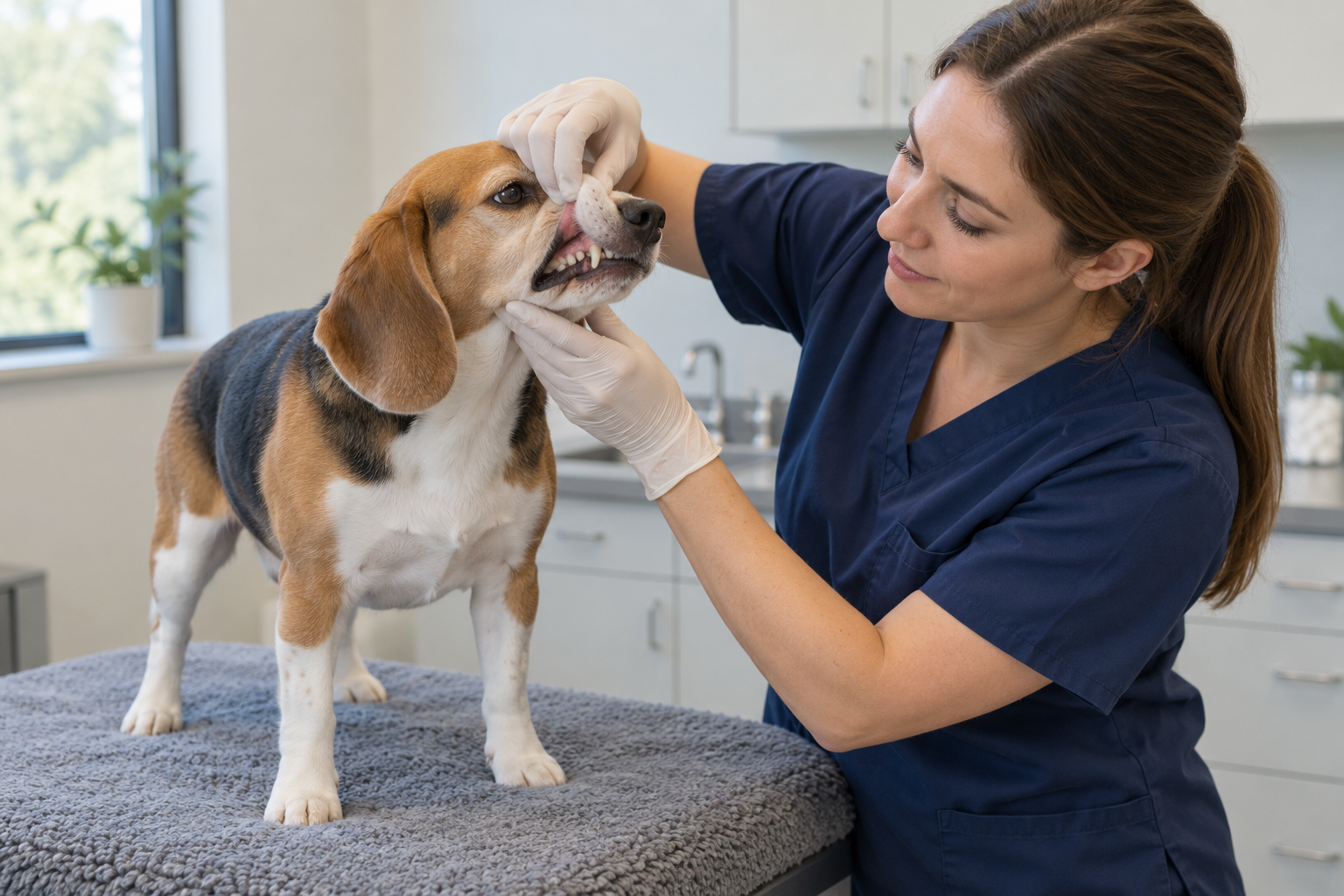
Once your dog is anesthetized, the veterinary team inspects each tooth and the surrounding gum tissue. Periodontal probing helps identify abnormal pockets around the teeth. AAHA also recommends full-mouth dental radiographs (X-rays) to evaluate tooth roots and supporting bone that cannot be assessed visually.
Step 4: Plaque and Tartar Removal (Scaling)
Specialized ultrasonic and hand instruments are used to carefully remove plaque and hardened tartar (calculus). Cleaning below the gumline is the most important part of the procedure, as this is where periodontal disease damages the tissues and bone supporting the teeth.
Because an awake dog cannot receive a thorough examination and cleaning beneath the gumline, “anesthesia-free” cosmetic scaling is not an effective substitute for a professional dog dental cleaning.
Step 5: Teeth Polishing
Scaling naturally leaves microscopic scratches on the tooth enamel. If left untreated, these tiny grooves become a magnet for new bacteria and plaque. To prevent this, the teeth are polished smooth, creating a surface that is much less favorable for future tartar accumulation.

Step 6: Addressing Dental Problems and Recovery
If the veterinarian discovers broken, abscessed, loose, or severely diseased teeth, additional treatment or extractions may be necessary to relieve pain and treat dental disease. Following the dog teeth cleaning, your pet is closely monitored during recovery.
Knowing what happens during a dog dental cleaning can make the recommendation feel much less intimidating. If your dog has persistent bad breath, visible yellow tartar, red or bleeding gums, loose teeth, or excessive drooling, schedule a veterinary dental evaluation with Olive Branch Pet Hospital rather than waiting for the disease to progress.