




My Dog Is Limping: When It’s More Than a Minor Injury
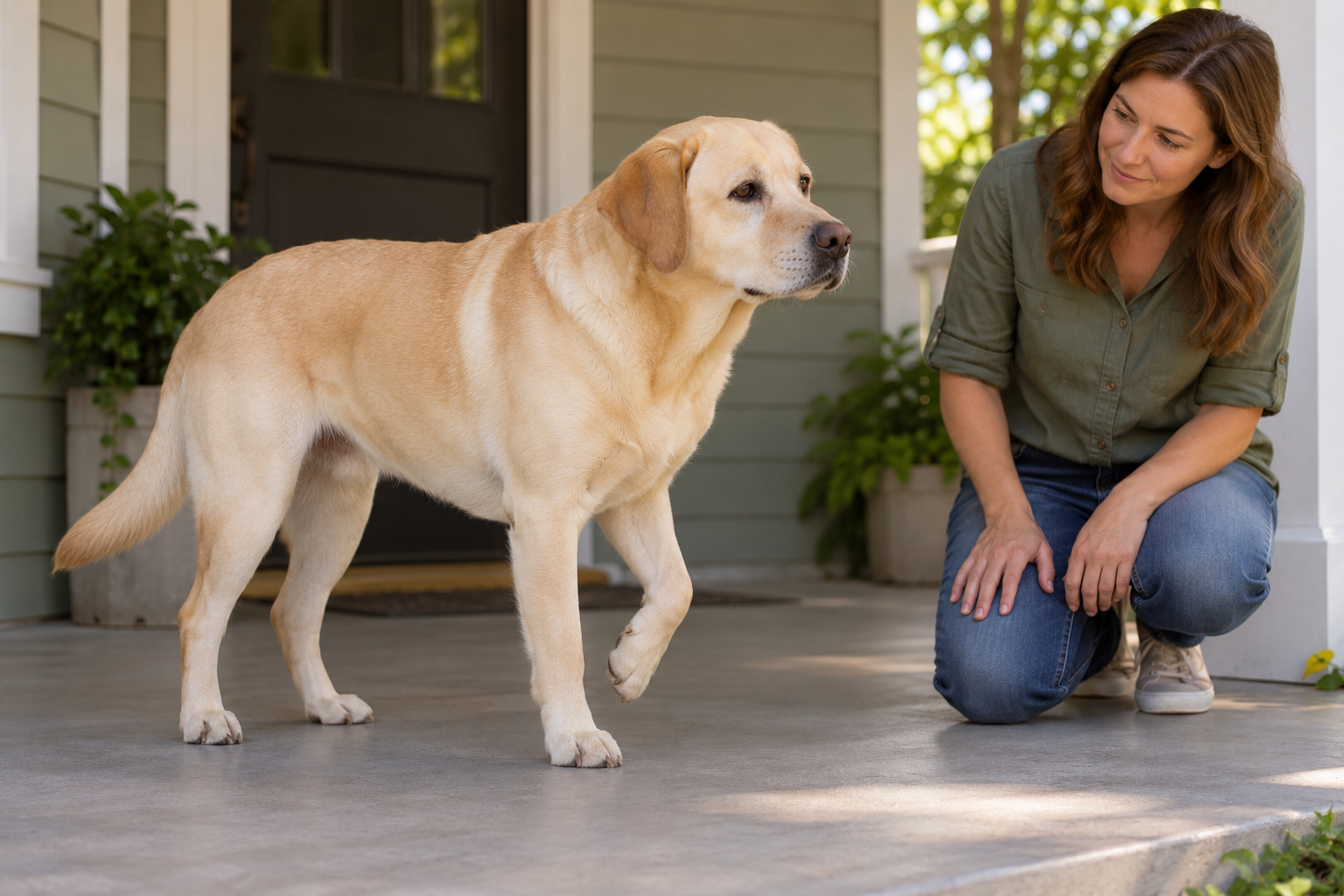
A limp is a sign that something is interfering with the normal use of one or more limbs. Veterinarians call this lameness. It can originate in a paw, muscle, tendon, ligament, joint, bone, nerve, or even the spine. A mild limp that quickly resolves after activity may be minor, but limping that persists, worsens, returns, or keeps your dog from bearing weight deserves veterinary attention.
Why is my dog limping?
Some causes are easy to spot, such as a torn nail, injured paw pad, or a foreign object stuck between the toes. Others are deeper and cannot be identified at home. Sprains and muscle strains can cause sudden soreness, while orthopedic conditions—such as cranial cruciate ligament (CCL) disease, a luxating kneecap, arthritis, hip dysplasia, or a fracture—may also change the way a dog walks.
Age, breed, size, activity level, and whether the limp started suddenly or gradually can help narrow the possibilities. For example, an older pet that becomes sore after playing may have a different underlying problem than a dog suddenly limping on a back leg or front leg after a jump.
When should a limping dog see a veterinarian?
As a general rule, any mild limp that does not improve with rest warrants an examination. Dogs do not always cry or whine when they are hurting, so seemingly normal behavior does not rule out pain.
Prompt veterinary evaluation is highly recommended if your dog is not putting weight on a leg, appears significantly painful (such as trembling or panting), has noticeable swelling, or if the limp is worsening. Emergency care is especially important after major trauma, if there is an obvious fracture or deformity, or if your dog cannot stand or walk without assistance.
How does a veterinarian diagnose a limp?
A lameness evaluation usually begins with your dog’s history and observation of how they stand, walk, and move. The veterinarian will then examine the paws, limbs, joints, muscles, and spine to look for pain, swelling, reduced range of motion, or joint instability.
Depending on those findings, diagnostic imaging or other testing may be recommended. Olive Branch Pet Hospital in Pensacola offers in-house veterinary diagnostics for injured pets, including ultrasound.
What should I do while my dog is limping?
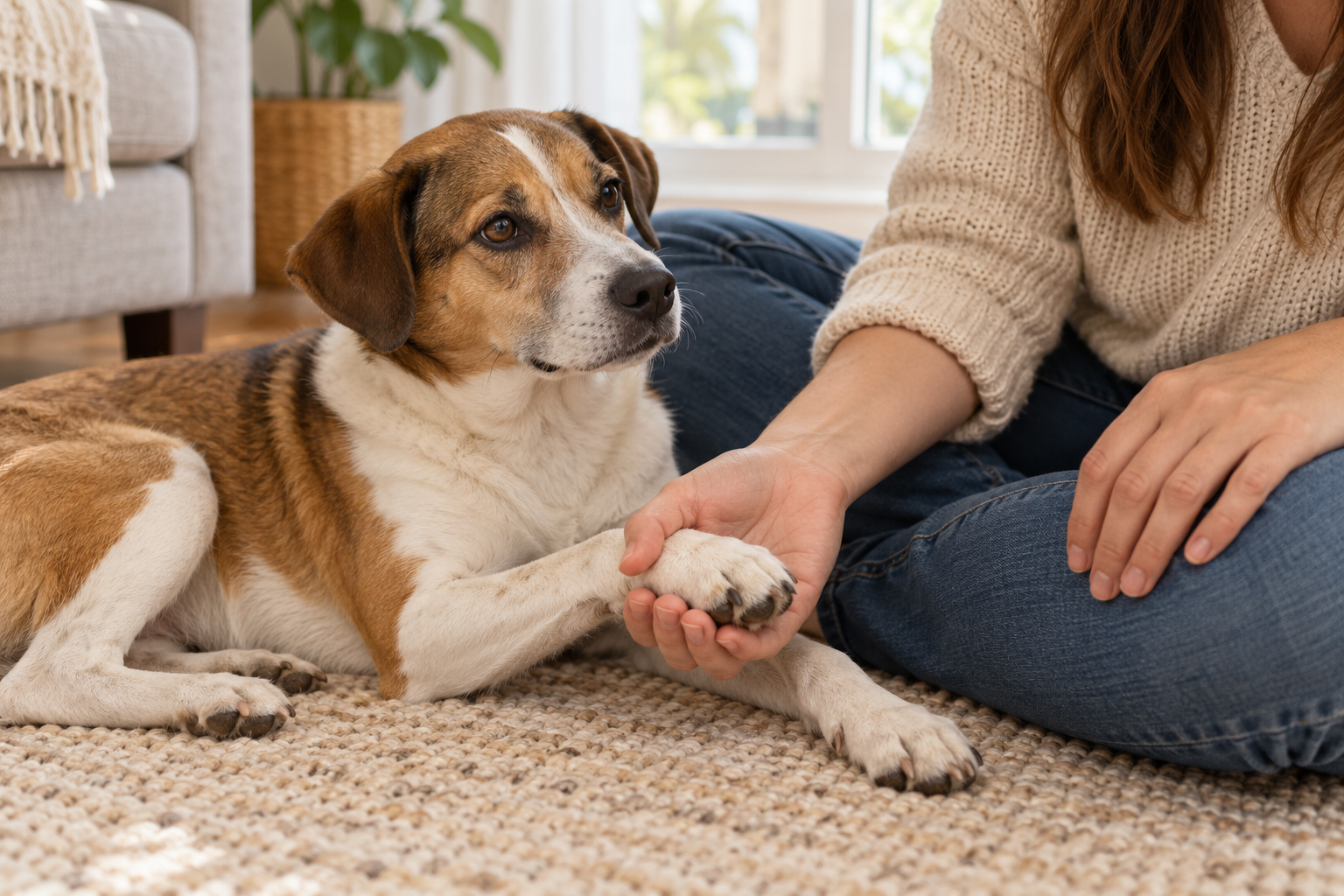
Until the cause is known, limit running, jumping, rough play, and strenuous activity. If your dog allows it safely, briefly check the paw pads, nails, and between the toes for an obvious superficial problem. Recording a short video of the limp can also be helpful, as some dogs may move normally at the veterinary hospital due to excitement or adrenaline.
Do not give your dog human pain relievers unless your veterinarian specifically instructs you to do so. Drugs such as ibuprofen, naproxen, aspirin, and acetaminophen can cause serious, life-threatening adverse effects in dogs.
Treatment always depends on the diagnosis. Some dogs may need strict rest and veterinarian-directed pain management, while others may benefit from laser therapy for pain and mobility, orthopedic treatment, or surgery. Olive Branch provides orthopedic surgery for pets requiring procedures such as fracture stabilization or joint repair.
If you are looking for a veterinarian for a limping dog, a proper examination can help identify the source of discomfort and determine the safest next step for recovery.
If your dog is limping, especially if the problem is persistent, painful, or worsening, schedule a veterinary examination with Olive Branch Pet Hospital in Pensacola to find out what is causing it and discuss the appropriate next step.