







When Is a Dog Cough Not Kennel Cough? When to See a Vet
If you are wondering when a dog cough is not kennel cough, the answer often lies in their other symptoms, medical history, and how the cough sounds. While a dry, honking cough after being around other dogs often points to kennel cough—also known as canine infectious respiratory disease complex (CIRDC)—a cough can also indicate pneumonia, tracheal collapse, heartworm disease, or heart conditions. Because the sound alone cannot confirm the cause, a veterinary evaluation is essential.
What Are the Symptoms of Kennel Cough?
Classic kennel cough typically starts suddenly after recent exposure to other dogs at a park, grooming salon, or during boarding and daycare. The cough is usually dry, harsh, or “honking” and may end with gagging or retching.
CIRDC is not a single infection; it can involve various viruses and bacteria. Despite the dramatic cough, many dogs with uncomplicated kennel cough remain bright, active, and interested in food. However, puppies, senior dogs, and dogs with underlying health conditions are more vulnerable to complications like pneumonia.
When Is a Dog Cough Not Kennel Cough?
A persistent or moist cough, or coughing with other signs of illness, may signal complications of kennel cough or another condition. A dog’s cough can originate in the throat, windpipe, or lungs, or be associated with cardiovascular disease. Chronic bronchitis and tracheal collapse can cause repeated, long-term coughing, while pneumonia usually brings a cough alongside a fever, poor appetite, or breathing changes.
In Pensacola, heartworm disease must also be considered. Transmitted by mosquitoes, heartworms damage the lungs and cardiovascular system. A mild, persistent cough may be a sign, although early infection often causes no symptoms. Olive Branch Pet Hospital strongly recommends year-round prevention for Florida pets to avoid this dangerous disease.
When to See a Vet for a Dog’s Cough
Call your veterinarian promptly if your dog’s cough is persistent, worsening, or accompanied by exercise intolerance, thick nasal discharge, a moist cough, lethargy, fever, or reduced appetite. Seek immediate emergency veterinary care for:
- Labored breathing, or rapid or open-mouth breathing at rest that is not normal panting
- Blue or gray gums
- Severe weakness, fainting, or collapse
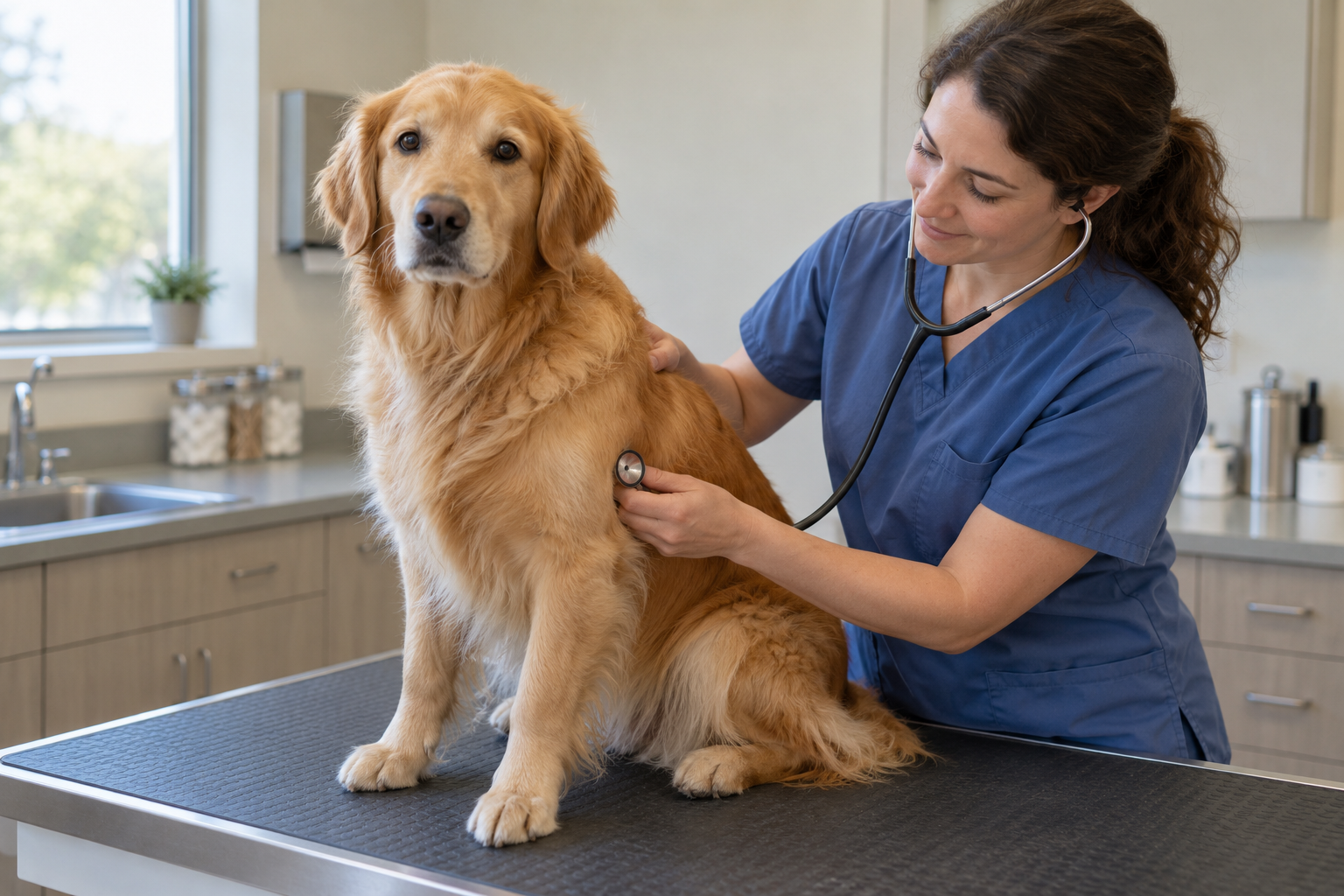
How Do Veterinarians Diagnose a Dog's Cough?
The first step is a comprehensive physical exam and a careful review of your pet’s history. Your vet will ask when the cough started, what it sounds like, recent dog-to-dog exposure, your pet’s vaccination status, and their heartworm prevention record.
Depending on the exam findings, further testing may be necessary. Blood chemistry panels help assess overall health, while chest X-rays evaluate the lungs and airways. Olive Branch Pet Hospital offers comprehensive in-house diagnostics, including blood chemistry, EKG to assess the heart’s electrical activity, and ultrasound to evaluate internal organs. Testing is selected according to your pet’s symptoms and examination findings.
A cough is a symptom, not a diagnosis. If your dog has a persistent, worsening, or unusual cough, schedule a veterinary exam with Olive Branch Pet Hospital in Pensacola to help identify the cause and determine the right next step.