






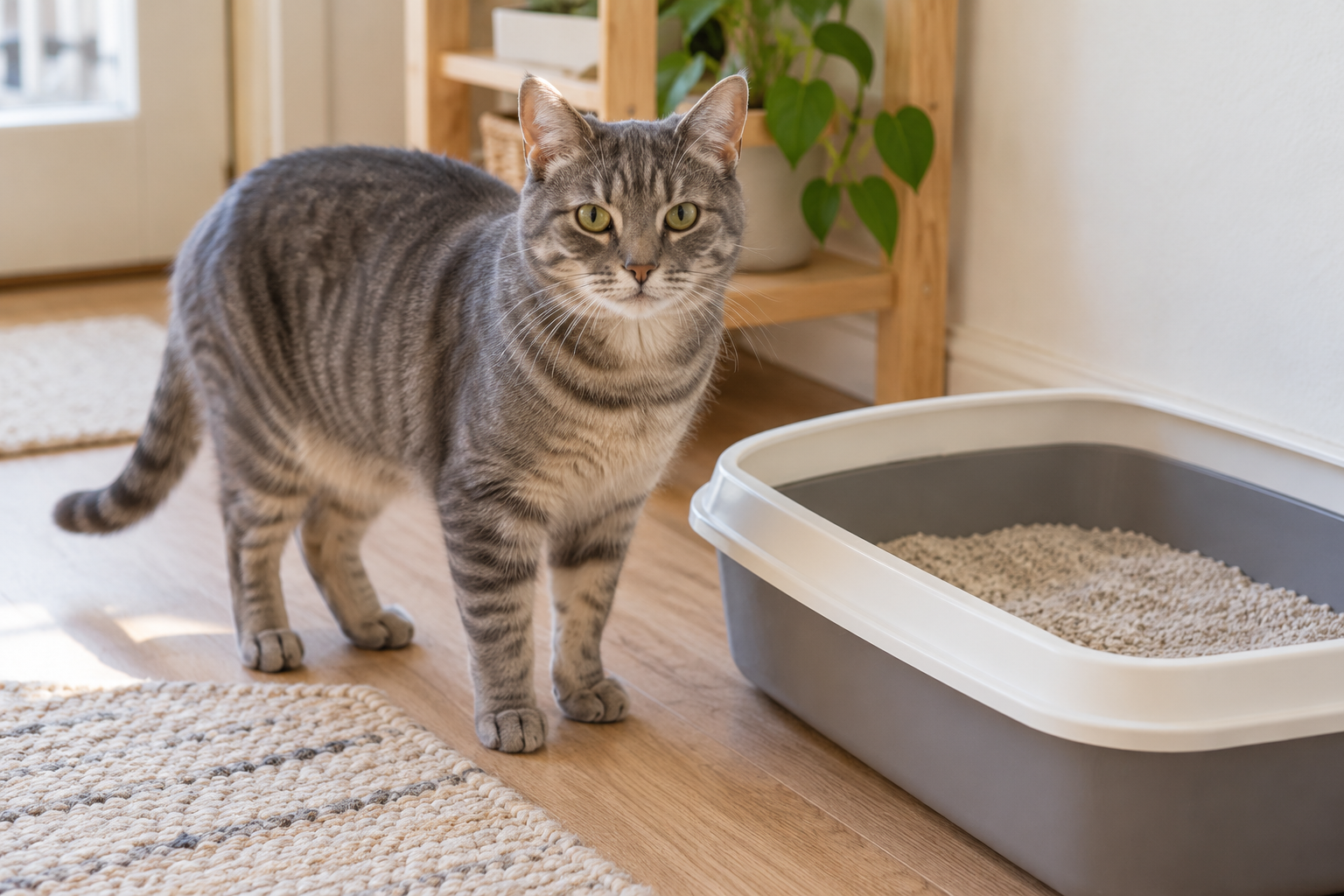
Seeing blood in your pet’s urine—a medical condition known as hematuria—is never something to ignore. Whether you have a dog or a cat, hematuria can be caused by bladder inflammation, urinary tract infections (UTIs), bladder or kidney stones, trauma, and, less commonly, tumors or bleeding disorders. Because the exact cause cannot be determined by color alone, a veterinary exam is the safest and most important next step.
What Does Blood in Pet Urine Look Like?
Hematuria may make your pet’s urine look pink, red, rust-colored, or streaked with visible blood. In some cases, the urine appears completely normal to the naked eye, and microscopic blood is only detected during a diagnostic urinalysis.
You may also notice your pet exhibiting other urinary symptoms, including:
- Urinating more often than usual
- Squatting repeatedly or producing only small drops of urine
- Crying or straining in the litter box or yard
- Licking their genital area excessively
- Having sudden accidents in the house
Because these symptoms can occur with several different—and potentially serious—urinary conditions, it is crucial not to assume your pet simply has a routine UTI.
When Is Blood in Pet Urine an Emergency?
While any blood in the urine warrants a prompt veterinary visit, some urinary symptoms require immediate emergency care.
Seek urgent veterinary attention if your pet:
- Is repeatedly straining to urinate but producing little or no urine
- Appears increasingly painful, vocal, or distressed
- Develops vomiting, loss of appetite, or profound lethargy
A urethral obstruction (blockage) prevents urine from leaving the bladder and can become life-threatening quickly. Male cats are at a particularly high risk for urinary blockages because their urethra is exceptionally narrow and easily plugged by urinary crystals or mucus.
If your pet is still passing a normal volume of urine and otherwise acts comfortable, it may not be a critical emergency, but they should still be evaluated by a veterinarian as soon as possible.
How Do Veterinarians Diagnose Urinary Problems?
A urinalysis examines the physical and chemical properties of urine, as well as the urine sediment. It helps identify red and white blood cells, crystals, bacteria, and changes in urine concentration, which helps narrow down the possible causes of your pet's symptoms.
At Olive Branch Pet Hospital in Pensacola, we offer complete diagnostic services, including in-house urinalysis. Depending on your pet’s physical exam, our veterinarians may also recommend blood chemistry or ultrasound to further evaluate the kidneys, bladder, and overall urinary tract health.

Why Is Prompt Veterinary Evaluation Important?
Urinary problems can look very similar from the outside, yet their causes and treatments are entirely different. An untreated infection can spread to the kidneys, while tiny bladder stones can grow or shift and cause a sudden blockage. Early evaluation can help identify the underlying issue and guide treatment before your pet’s discomfort worsens or complications develop.
Notice blood or other changes in your dog or cat’s urine? Contact Olive Branch Pet Hospital in Pensacola to schedule a veterinary exam and appropriate diagnostics.
For the emergency signs above, seek immediate veterinary care instead of waiting for an appointment.