




Dog Heatstroke in Pensacola: When It Becomes an Emergency
Pensacola’s hot, humid weather can put dogs at risk for heat-related illnesses faster than many pet owners expect. Heatstroke is more than simply “getting too hot.” It happens when a dog’s body temperature rises to a dangerous level and they can no longer cool themselves effectively.
Because dogs rely primarily on panting rather than sweating to regulate their body temperature, high heat, intense humidity, strenuous activity, poor ventilation, or a lack of shade can rapidly overwhelm their natural cooling system.
When Is Dog Heatstroke an Emergency?
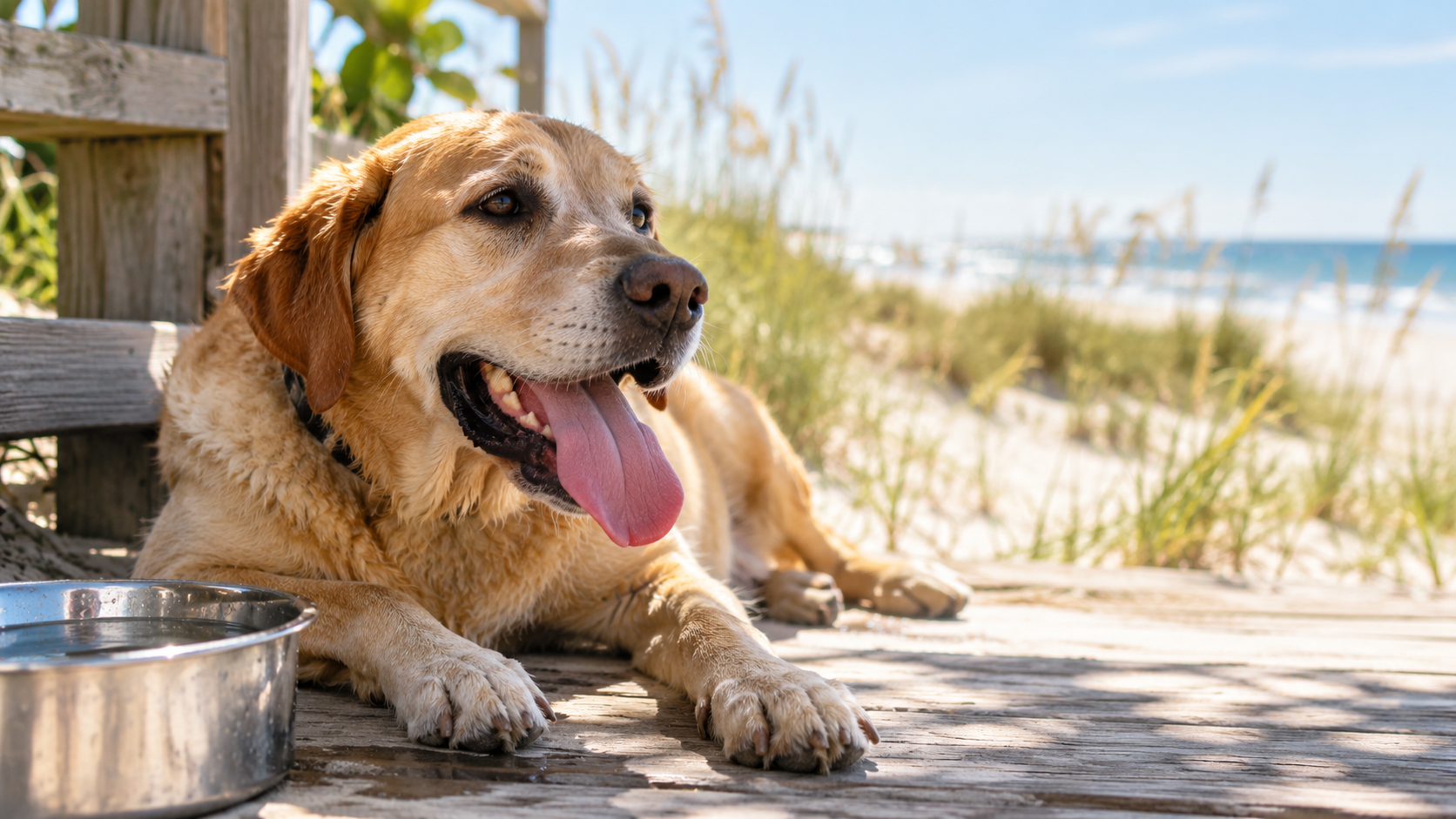
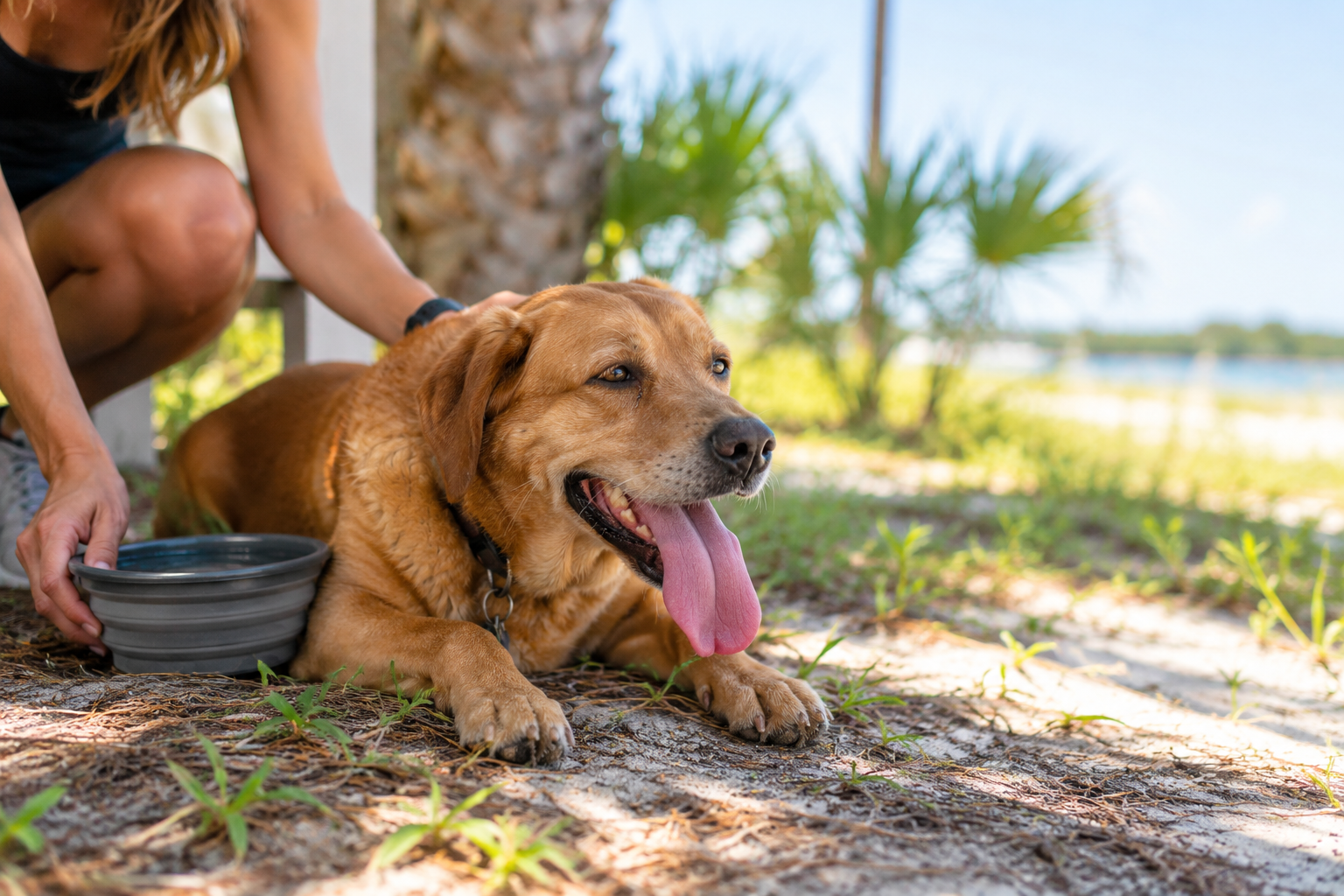
Early dog overheating symptoms include heavy panting, excessive drooling, seeking shade, slowing down, or refusing to continue playing. If you notice these signs, move your dog to an air-conditioned or shaded area immediately and stop all activity.
Heatstroke should always be treated as a life-threatening veterinary emergency. Signs of heatstroke in dogs include:
- Persistent or extreme panting
- Difficulty breathing
- Weakness, stumbling, or collapse
- Confusion or unresponsiveness
- Vomiting or diarrhea
- Abnormal gum color (bright red, pale, or blue)
- Seizures or loss of consciousness
Heatstroke can rapidly damage a dog’s kidneys, gastrointestinal tract, brain, and blood-clotting system. Because these internal complications can continue to develop after the initial event, a dog still needs a thorough veterinary evaluation even if they seem perfectly fine after cooling down.
How to Cool an Overheated Dog Safely
If you suspect your pet is suffering from heatstroke, immediate action is required:
Get out of the heat: Move your dog indoors or into the shade immediately.
Contact a veterinarian: Call for professional medical guidance right away.
Begin gentle cooling: Apply cool (not cold) or room-temperature water to their paws, belly, and armpits. Keep air moving over them using a fan or air conditioning to encourage evaporation.
Offer water safely: If your dog is alert and able to swallow normally, offer small amounts of cool drinking water. Do not force them to drink.
What NOT to do: Do not use an ice bath or very cold water. Extreme cold causes surface blood vessels to constrict, which paradoxically traps heat inside the body’s core. Additionally, do not tightly wrap your dog in wet towels. While loosely placing a damp cloth under the armpits or on the belly is helpful, wrapping them tightly traps heat and prevents crucial evaporation.
Which Dogs Are at Higher Risk?
Any dog can develop dog heatstroke in Pensacola, but the risk is significantly higher for certain pets:
- Short-nosed (brachycephalic) breeds like Bulldogs, Frenchies, and Pugs
- Senior dogs and puppies
- Overweight dogs
- Thick-coated breeds
- Dogs with pre-existing heart or breathing conditions
Pensacola Veterinary Care for Heatstroke
At Olive Branch Pet Hospital, our team evaluates sick and injured pets and offers in-house veterinary diagnostics, including blood chemistry and urinalysis. These tests help our veterinarians assess internal organ function and determine if heat exposure has caused hidden complications.
When seeking emergency veterinary care during office hours, please call before arriving if you believe your dog is in a crisis. Olive Branch directs all after-hours emergencies to the Pensacola Emergency and Referral Center.
Prevention Tips for Pensacola Pet Owners
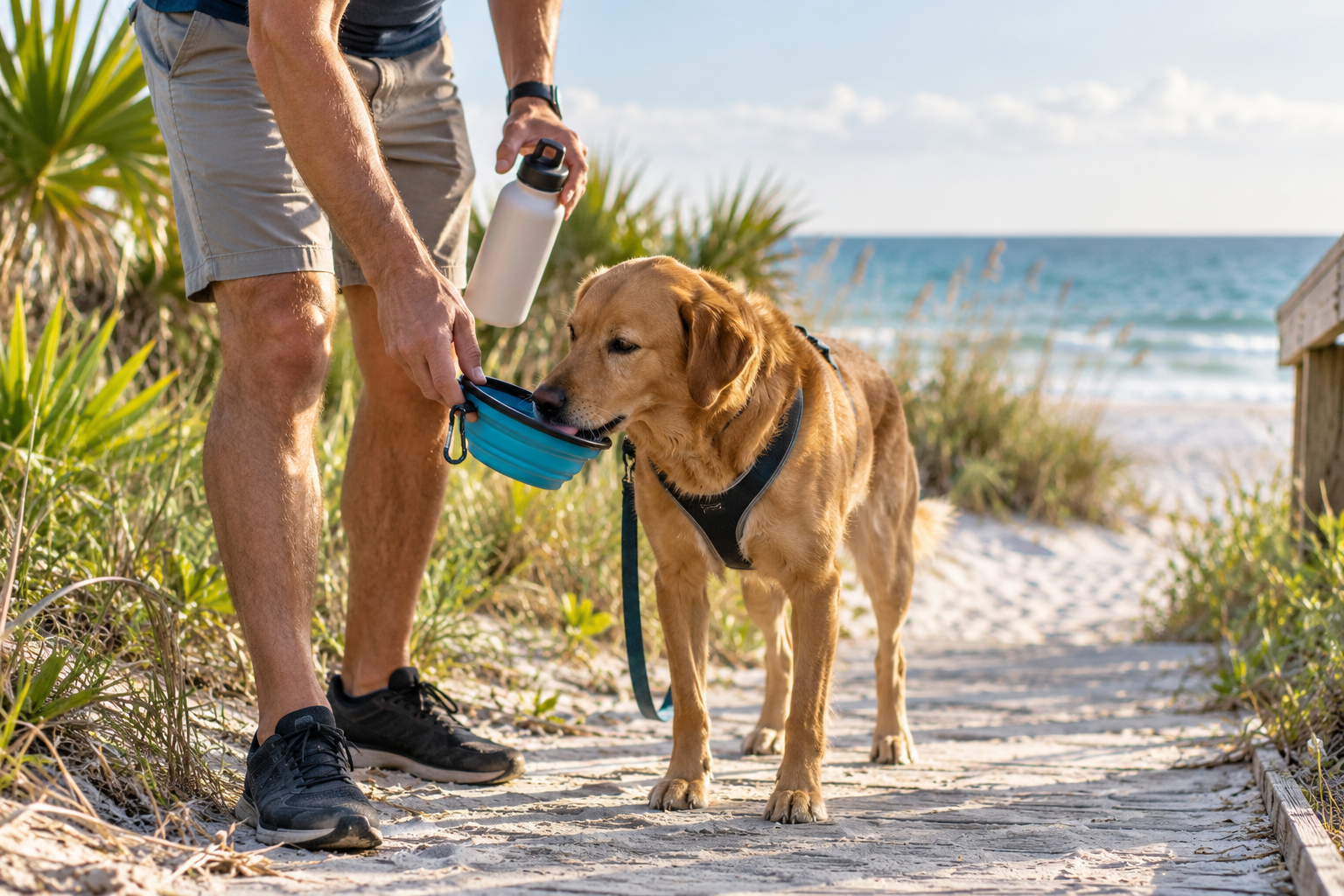
Prevention means scheduling walks and outdoor play for the cooler early morning or late evening hours. Provide constant access to fresh water and deep shade, take frequent rest breaks, and never leave a dog unattended in a parked vehicle. For more comprehensive advice, review our summer safety tips for pets in Pensacola.
If your dog is showing concerning signs after heat exposure, do not wait for symptoms to become severe. During office hours, call Olive Branch Pet Hospital before arriving; after hours, contact the Pensacola Emergency and Referral Center.