

What Really Happens During a Dog Dental Cleaning? Step by Step

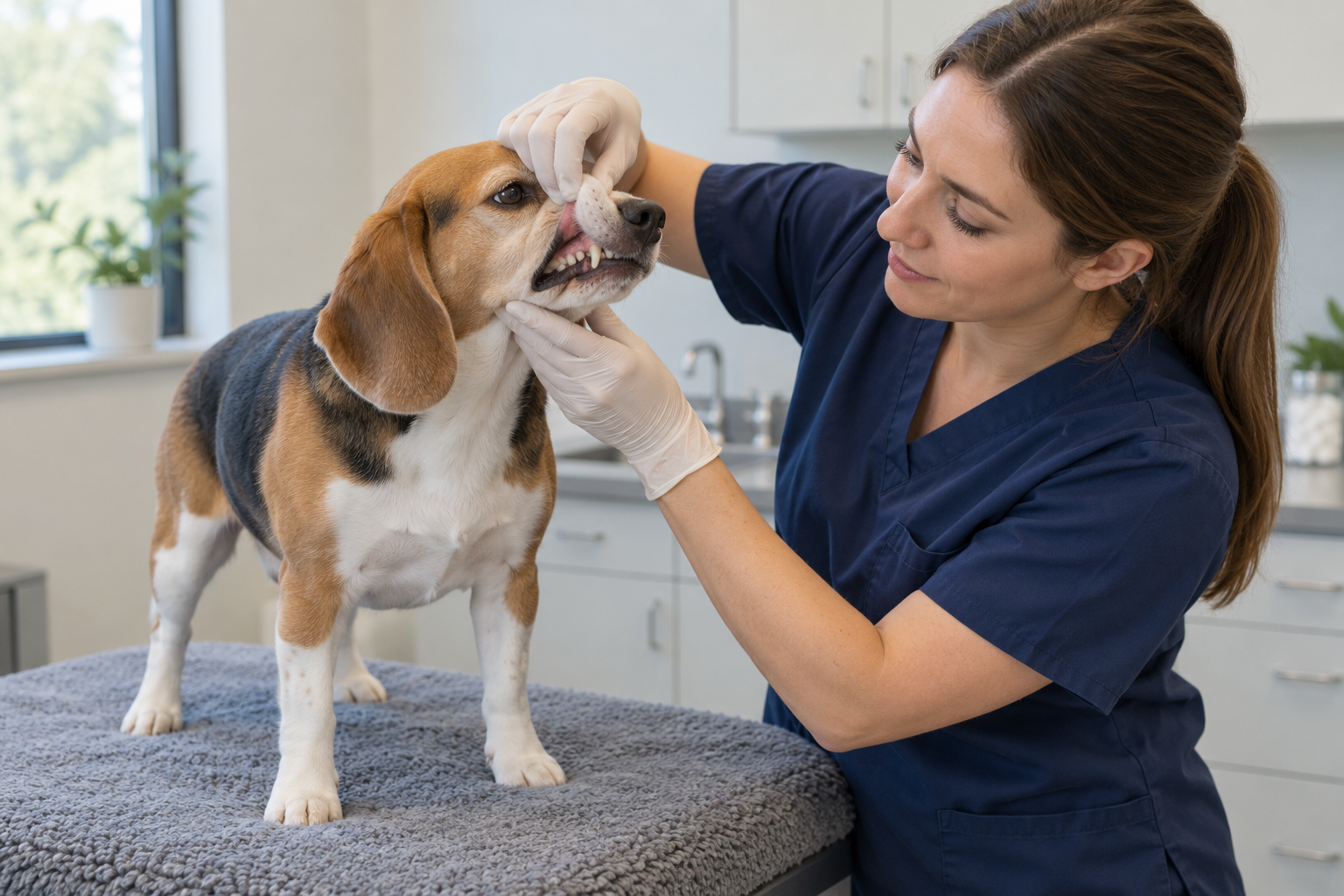
Veterinary professional gently lifting an awake beagle’s lip for a visual dental examination.

If your veterinarian recommends a dental cleaning for your dog, it is normal to wonder what actually happens once your pet leaves the exam room. A professional veterinary dental cleaning is much more than merely scraping visible tartar from the teeth.

What happens during a dog dental cleaning? A comprehensive procedure typically includes a pre-anesthetic exam, general anesthesia, a complete oral evaluation, ultrasonic scaling above and below the gumline, and teeth polishing.

This thorough process allows the veterinary team to examine the entire mouth and identify dental problems that may be missed while a dog is awake. At Olive Branch Pet Hospital, our dog dentistry services in Pensacola include everything from preventative oral care to veterinary tooth extractions when needed.

Step 1: Pre-Anesthetic Evaluation and Diagnostics

Dental care begins before any cleaning takes place. Your veterinarian will examine your dog’s mouth and evaluate their overall health. Dr. Mark Sprayberry and our team recommend bloodwork before your pet undergoes anesthesia. Using our in-house blood chemistry and diagnostic testing, we evaluate organ function to help tailor the anesthetic plan and reduce risk.

Step 2: General Anesthesia and Monitoring

A complete veterinary dental procedure requires access beneath the gumline, where periodontal disease can develop. The American Animal Hospital Association (AAHA) guidelines call for general anesthesia with airway protection and appropriate monitoring for comprehensive dental cleanings.

A dog dental cleaning under anesthesia keeps your pet still and prevents the stress of probing sensitive areas. Pain management is tailored to the procedure. AAHA recommends monitoring vital signs, including heart rate and oxygen levels, throughout anesthesia and recovery.

Step 3: Comprehensive Oral Examination

Once your dog is anesthetized, the veterinary team inspects each tooth and the surrounding gum tissue. Periodontal probing helps identify abnormal pockets around the teeth. AAHA also recommends full-mouth dental radiographs (X-rays) to evaluate tooth roots and supporting bone that cannot be assessed visually.

Step 4: Plaque and Tartar Removal (Scaling)

Specialized ultrasonic and hand instruments are used to carefully remove plaque and hardened tartar (calculus). Cleaning below the gumline is the most important part of the procedure, as this is where periodontal disease damages the tissues and bone supporting the teeth.

Because an awake dog cannot receive a thorough examination and cleaning beneath the gumline, “anesthesia-free” cosmetic scaling is not an effective substitute for a professional dog dental cleaning.

Step 5: Teeth Polishing

Scaling naturally leaves microscopic scratches on the tooth enamel. If left untreated, these tiny grooves become a magnet for new bacteria and plaque. To prevent this, the teeth are polished smooth, creating a surface that is much less favorable for future tartar accumulation.

Pet owner talking on a phone while a small terrier sits beside him on a sofa.

Step 6: Addressing Dental Problems and Recovery

If the veterinarian discovers broken, abscessed, loose, or severely diseased teeth, additional treatment or extractions may be necessary to relieve pain and treat dental disease. Following the dog teeth cleaning, your pet is closely monitored during recovery.

Knowing what happens during a dog dental cleaning can make the recommendation feel much less intimidating. If your dog has persistent bad breath, visible yellow tartar, red or bleeding gums, loose teeth, or excessive drooling, schedule a veterinary dental evaluation with Olive Branch Pet Hospital rather than waiting for the disease to progress.
Dog Heatstroke in Pensacola: When It Becomes an Emergency

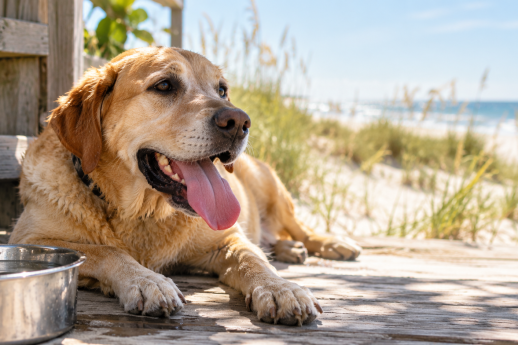
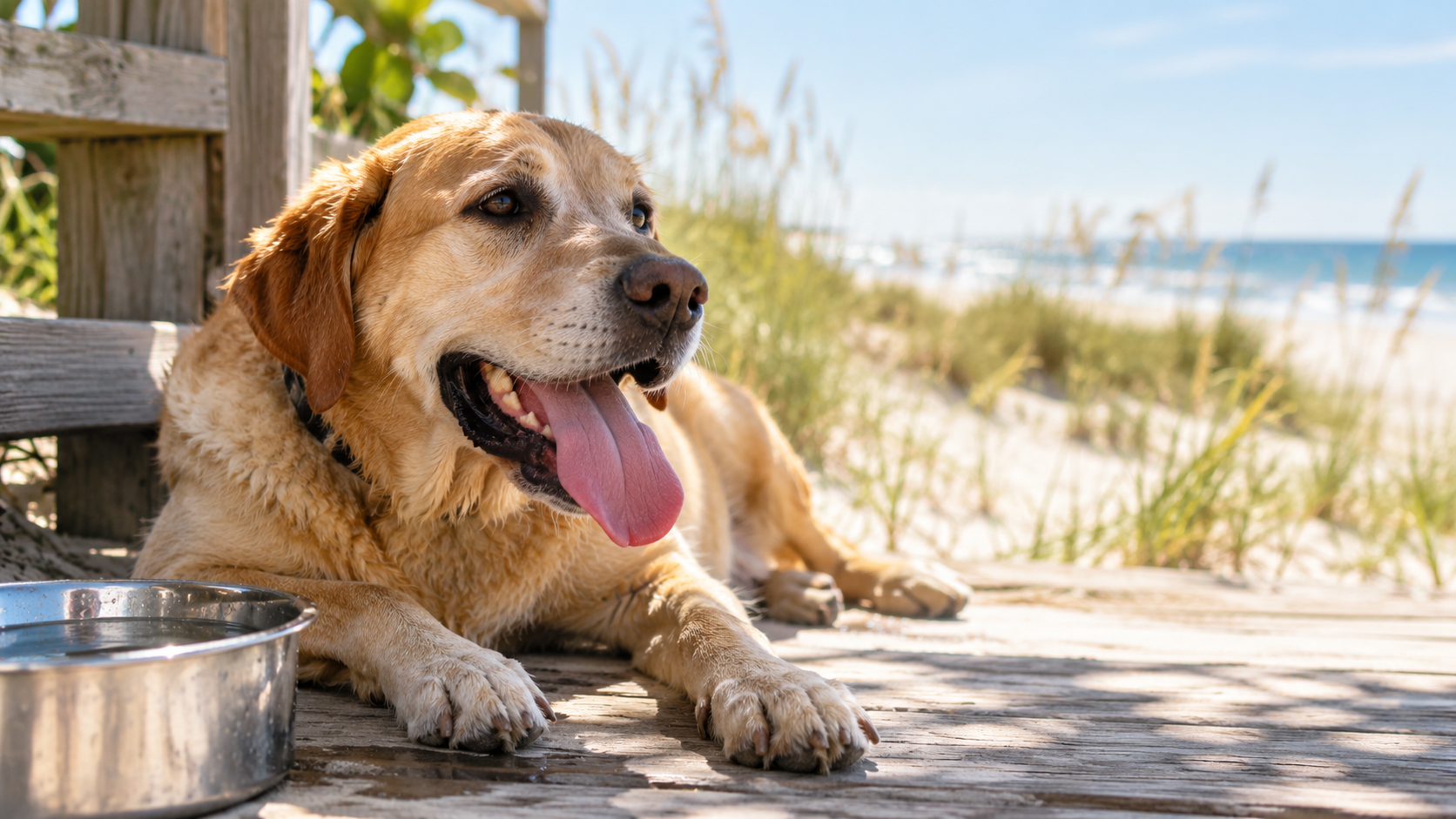
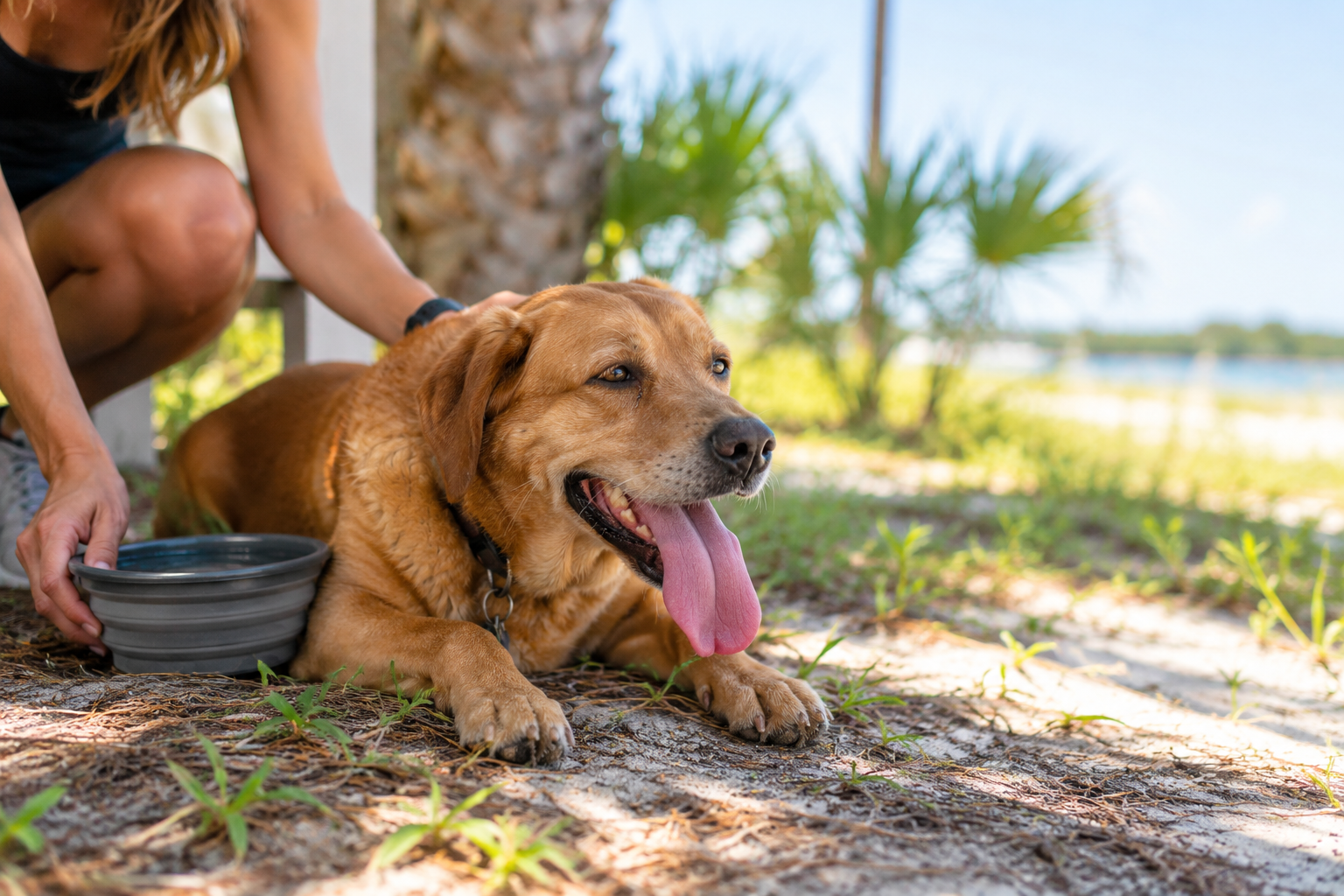
Overheated dog resting in the shade while being offered water

Dog Heatstroke in Pensacola: When It Becomes an Emergency

Pensacola’s hot, humid weather can put dogs at risk for heat-related illnesses faster than many pet owners expect. Heatstroke is more than simply “getting too hot.” It happens when a dog’s body temperature rises to a dangerous level and they can no longer cool themselves effectively.

Because dogs rely primarily on panting rather than sweating to regulate their body temperature, high heat, intense humidity, strenuous activity, poor ventilation, or a lack of shade can rapidly overwhelm their natural cooling system.

When Is Dog Heatstroke an Emergency?

Early dog overheating symptoms include heavy panting, excessive drooling, seeking shade, slowing down, or refusing to continue playing. If you notice these signs, move your dog to an air-conditioned or shaded area immediately and stop all activity.

Heatstroke should always be treated as a life-threatening veterinary emergency. Signs of heatstroke in dogs include:

  • Persistent or extreme panting
  • Difficulty breathing
  • Weakness, stumbling, or collapse
  • Confusion or unresponsiveness
  • Vomiting or diarrhea
  • Abnormal gum color (bright red, pale, or blue)
  • Seizures or loss of consciousness

Heatstroke can rapidly damage a dog’s kidneys, gastrointestinal tract, brain, and blood-clotting system. Because these internal complications can continue to develop after the initial event, a dog still needs a thorough veterinary evaluation even if they seem perfectly fine after cooling down.

How to Cool an Overheated Dog Safely

If you suspect your pet is suffering from heatstroke, immediate action is required:

  1. Get out of the heat: Move your dog indoors or into the shade immediately.

  2. Contact a veterinarian: Call for professional medical guidance right away.

  3. Begin gentle cooling: Apply cool (not cold) or room-temperature water to their paws, belly, and armpits. Keep air moving over them using a fan or air conditioning to encourage evaporation.

  4. Offer water safely: If your dog is alert and able to swallow normally, offer small amounts of cool drinking water. Do not force them to drink.

What NOT to do: Do not use an ice bath or very cold water. Extreme cold causes surface blood vessels to constrict, which paradoxically traps heat inside the body’s core. Additionally, do not tightly wrap your dog in wet towels. While loosely placing a damp cloth under the armpits or on the belly is helpful, wrapping them tightly traps heat and prevents crucial evaporation.

Which Dogs Are at Higher Risk?

Any dog can develop dog heatstroke in Pensacola, but the risk is significantly higher for certain pets:

  • Short-nosed (brachycephalic) breeds like Bulldogs, Frenchies, and Pugs
  • Senior dogs and puppies
  • Overweight dogs
  • Thick-coated breeds
  • Dogs with pre-existing heart or breathing conditions
  •  

Pensacola Veterinary Care for Heatstroke


At Olive Branch Pet Hospital, our team evaluates sick and injured pets and offers in-house veterinary diagnostics, including blood chemistry and urinalysis. These tests help our veterinarians assess internal organ function and determine if heat exposure has caused hidden complications.

When seeking emergency veterinary care during office hours, please call before arriving if you believe your dog is in a crisis. Olive Branch directs all after-hours emergencies to the Pensacola Emergency and Referral Center.

Dog drinking water during a beach walk in Pensacola

Prevention Tips for Pensacola Pet Owners

Prevention means scheduling walks and outdoor play for the cooler early morning or late evening hours. Provide constant access to fresh water and deep shade, take frequent rest breaks, and never leave a dog unattended in a parked vehicle. For more comprehensive advice, review our summer safety tips for pets in Pensacola.

If your dog is showing concerning signs after heat exposure, do not wait for symptoms to become severe. During office hours, call Olive Branch Pet Hospital before arriving; after hours, contact the Pensacola Emergency and Referral Center.

Vaccinations

Vaccinations

“To vaccinate or not to vaccinate… That is the question!”

Recently, there has been much debate, fueled primarily by the media, regarding yearly vaccinations of pets. The media, as well as other non-veterinary groups, are asserting that veterinarians are over vaccinating pets in this country. This month’s article will look at this important issue and try to shed some light on this controversial subject.
It is uncertain why or when the veterinary experts at the time decided that yearly vaccinations were the best protocol. Maybe, 50 years ago when supposingly this began, veterinarians extrapolated from human vaccine protocols and continue their recommendations today. I recently attended a large vaccination symposium discussing these issues to determine are vaccinations necessary and do they pose a health hazard to the pet or human.
Major points of the meeting looked at current human protocols compared to veterinary medicine and detrimental health issues to pets and humans as a result of vaccinating or not vaccinating yearly.
I do not have any children, so I have no concept of what vaccines babies/kid/teenagers receive. Experts at the symposium presented a slide from the American Board of Pediatrics regarding their current vaccination protocol for babies in their first year or so of life. It was amazing! According to the protocol, vaccines are given every week for several months. This differs from veterinary medicine in that vaccines are started at 8 weeks of age and done every 3 weeks until 16 weeks of age, then recommended yearly. The program expert calculated a several fold increase in the number of diseases babies are vaccinated against in the first year compared to dogs/cats. Many diseases in children have not been seen in decades, but why do kids still receive vaccines for them? The answer to the question is with a question… would you rather your child get a potential deadly disease or would you rather have them vaccinated prophylacticaly? Most pediatricians have never seen some of the diseases they vaccinate for and would never see them unless visiting a third world country. The same holds true for our pet friends, except, I personally have seen all the diseases I vaccinate yearly for in the past 8 years. Some of these diseases I see every month such as Aids, Leukemia, Hepatitis. Recent research has shown that adverse effects attributed to vaccines themselves cannot be substantiated. Some people ask me to run a blood test on their pet instead of vaccinating to determine if their vaccine level is high enough to protect against disease. If every pet were exactly the same with the exact same immune status, blood tests may be useful. In other words, a flu shot may protect me, but not you since our bodies require different amounts of vaccine for protection.
Current recommendations by immunologists, veterinary colleges and vaccine researchers is to continue with yearly vaccines for Rabies/Distemper and twice yearly for Bordetella in dogs and once yearly vaccines in cats. I guess the old adage of “if it ain’t broke, don’t fix it” may apply to disease prevention and vaccine protocols.
As always, if you have any questions or concerns regarding this month’s health article, please feel free to call the office.

Canine Heartworm Disease

Canine Heartworm Disease

The Southern states rank first in the nation for heartworm infection (Dirofilaria Immitis). Florida is first among the southern states and therefore first in the nation for this deadly disease.
The mosquito transmits heartworm disease. This occurs by a mosquito obtaining a blood meal from an infected dog and then injecting the larvae in a non infected animal. Over a 6 month period, the larvae develop into adult heartworms and reside in the right side of the heart and vessels leading to the lungs. Adult heartworms begin to produce microfilaria (baby heartworms) which will also develop into adults in about 4 to 6 months. If the infection is allowed to continue, the dog will die from right sided heart failure or a complication thereof.
Diagnosis is quick and easy. The American Heartworm Association recommends an antigen (occult) heartworm test be performed once to twice yearly depending on location and incidence of heartworm disease. The antigen (occult) tests for adult heartworm protein in the patient’s blood. It takes 10 minutes and is virtually 100% specific. Ninety-nine percent of dogs with mature heartworm infection are antigen positive (have an infection). It is imperative your pet be tested at least yearly for heartworms even if you are diligent about giving prevention once monthly. Giving an infected pet heartworm prevention can be lethal and I have seen it occur throughout my career.
There are several heartworm preventatives on the market. Two products we carry are Heartgaurd Plus (Ivermectin/Pyrantel) and Revolution (Selamectin). Heartgaurd is a once a month chewable preventative for heartworms and also intestinal parasites. It does not provide flea or tick prevention. Revolution is the newest product on the market and is applied once a month topically to the skin. It provides heartworm, intestinal parasite, flea, tick, ear mite and skin scabies protection. As with all preventatives however, nothing is 100% effective and is why testing is necessary at least yearly.
We treat 5 to 6 cases a year for heartworm disease costing the owners $400 to $600 per case. Not only is it much less expensive to use a preventative, but also obviously better for your pet. If you have any questions regarding heartworm disease or prevention, feel free to contact the office.